exquisite black and white photos capture moody park

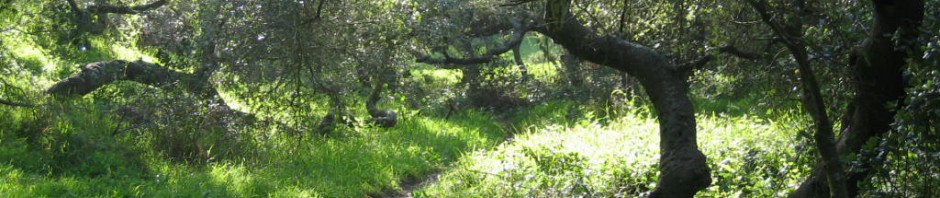
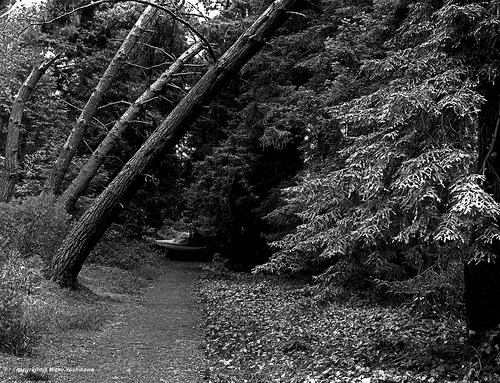
a path in golden gate park (photo by Mitsu Yoshikawa)

Walking around Stow Lake these days you might encounter a dapper, white-haired gentleman with a gorgeous 4 x 5 camera on a tripod, lens focused on a group of stones at the water’s edge or a distant, misty view of ivy festooned trees.  That would be Mistsu Yoshikawa, who is working on a photographic essay of Stow Lake.

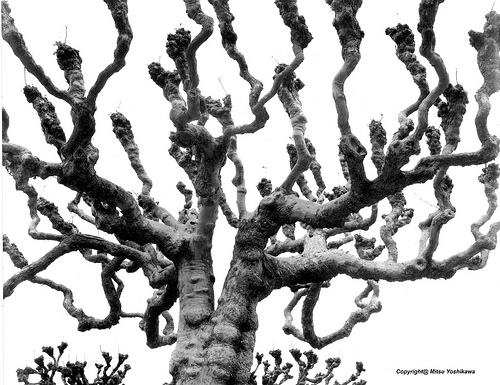
Mitsu Yoshikawa, who lives not far from the park and has spent many hours taking photographs there, follows in the footsteps of iconic nature photographers like Edward Weston, whose work he admires and credits as an inspiration.  His 4×5 camera, set for long exposures, allows him to capture the park landscape in exquisite detail, whether framing an arresting image of bark or leaves up close or a distant grove of trees enveloped in mist.  Collectively his photographs of the park evoke a swampy, over-grown, mysterious place .  .  .  no people in sight.  This is primarily a world of plants, water, wood and stone, but sometimes a bridge or path or artful pruning will hint at human presence.

trees at the music concourse, golden gate park (photo by Mitsu Yoshikawa)

Mitsu Yoshikawa teaches photography classes, including darkroom developing, at the recreation center in Duboce Park, where a number of his photographs are also on display.  To see more of his work: http://mitsuyoshikawa-image.com/

Posted in arts, people, trees/urban forest | Tagged , , | Leave a comment

feeding feral cats in golden gate park

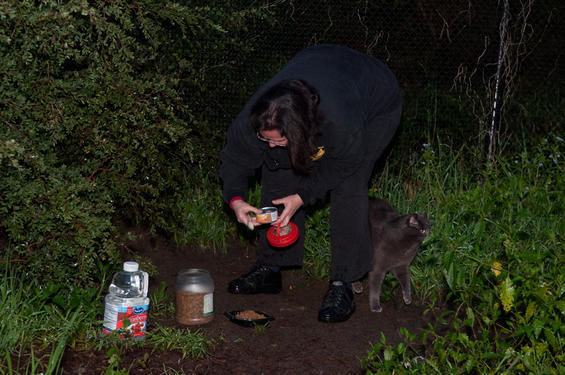
feeding feral cats in golden gate park (photo: sfweekly, 3/30/11)

The definition of “wildlife” in urban parks is far from precise! Here’s an excerpt from a story by Matt Smith from SF Weekly that illustrates evolving urban ecology and some of the dilemmas that attend this evolution.

“It’s 7 o’clock on a dewy Friday morning as Paula Kotakis pushes through the brush just west of the de Young Museum in Golden Gate Park. She’s wearing a green nylon jacket, slacks, and muddied black athletic shoes — her cat-hunting outfit. As she rattles a scoop of kibble, out ambles Gigi, a fat gray feline who inhabits the thickets nearby.

“Gigi’s pretty butch,” Kotakis offers by way of introduction.

Not butch enough, apparently, to frighten off a 5-inch-long rat. In the tall grass west of the museum, Kotakis pulls out a cardboard box she keeps stashed there. It contains two empty bowls, into which she now pours some water and dry cat food. The latter come from the plastic bin, jugs, and crates of cat supplies she always keeps in her car’s trunk. Kotakis steps back, waits, then exclaims: “Look, there’s a rat who came to get the food.”

Sure enough, a brown-and-white-banded rodent creeps along the side of the box. Gigi crouches, then feigns a lunge toward the rat, which retreats strategically into the box and behind the food bowl. Gigi stalks away 10 steps, then stops, turns, and glares back at her food.

This underbrush encounter unfolds with surprising naturalism, as if these feral animals barely notice Kotakis. She might as well have melted into the landscape: She has come to this spot so frequently, for so many years, that these urban creatures seem unafraid around her.  .  .  .

Kotakis is not alone in her dedication. She is one of more than 100 self-described cat caregivers in San Francisco who prowl the city’s underbrush each morning and night to refill hidden cat dishes. They see themselves as a vital force against an alternative they consider unconscionable: having feral cats, either abandoned or born into the wild (and thus, unsociable and unsuitable for adoption) killed at animal shelters.

The feral cat advocates (Kotakis calls herself and her friends “feral people”) say their real objective is to reduce the city’s population of feral cats by trapping and spaying as many as they can, then letting the neutered animals live out their lives in well-fed, outdoor comfort. This, they argue, is the most humane and effective way to reduce feral populations. This approach — trap, neuter, release, or TNR — is San Francisco’s primary method of dealing with stray cats.  .  .  .

During the past decade, cat ladies like Kotakis, all but invisible as they do their feeding rounds in urban but wildlands, have evolved into a powerful national force. Led by Alley Cat Allies, a Washington, D.C.-area nonprofit with a $5 million annual budget, some 200 charities oriented to help feral cats strive to convince local, regional, and national government agencies to adopt TNR as an alternative to killing cats in shelters. “Dozens of cities and municipalities across the country have embraced TNR as official feral cat policy — and the momentum is building,” Alley Cat Allies communications manager Elizabeth Parowski says. The San Francisco SPCA adopted TNR as its official feral cat policy in 1993.  .  .  .

But people outside the world of cat lovers aren’t pleased with this version of success. Environmentalists and natural preservationists condemn the feral feeding movement as deeply misguided. They charge that returning feral cats to the wild and feeding them merely sustains the cats, which are efficient bird killers and disease spreaders. Other critics say that it’s impossible to care for all outdoor cats, explaining that feral cats are sickened by bad weather, run over by cars, killed by coyotes, or simply starved because feeders weren’t able to attend to a cat colony for the several years or more that are called for. As a result, the animals are left to suffer and die in pain.  .  .  .

Environmentalists point out that outdoor cats are a greater problem to the natural ecological balance than most people realize. In urban and suburban areas, outdoor cats are the No. 1 killer of birds, by a long shot, according to a new study in the Journal of Ornithology. Researchers from the Smithsonian Institution put radio transmitters on young catbirds and found that 79 percent of deaths were caused by predators, nearly half of which were cats.

The American Bird Conservancy estimates that America’s 150 million outdoor cats kill 500 million birds a year. Feral cat feeders ‘are passionate, and they’re determined that what they do is a good thing,’ says Arthur Feinstein, the former executive director of the Golden Gate Audubon Society. ‘But when you get to those things where they claim … that cats don’t kill birds, well, I can claim the moon is made of blue cheese, but that doesn’t make it true.'”

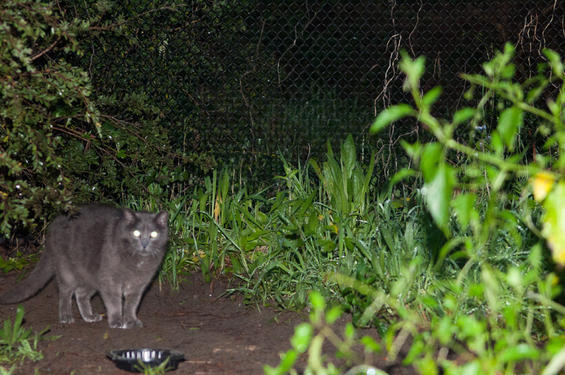
feral cat in golden gate park (photo: sfweekly, 3-30-11)

via S.F. Feral Cats Policy Good for Cats, Terrible for Birds – Page 1 – News – San Francisco – SF Weekly.
Posted in people, urban ecology, wildlife | Tagged , , , | 7 Comments

who really designed golden gate park?

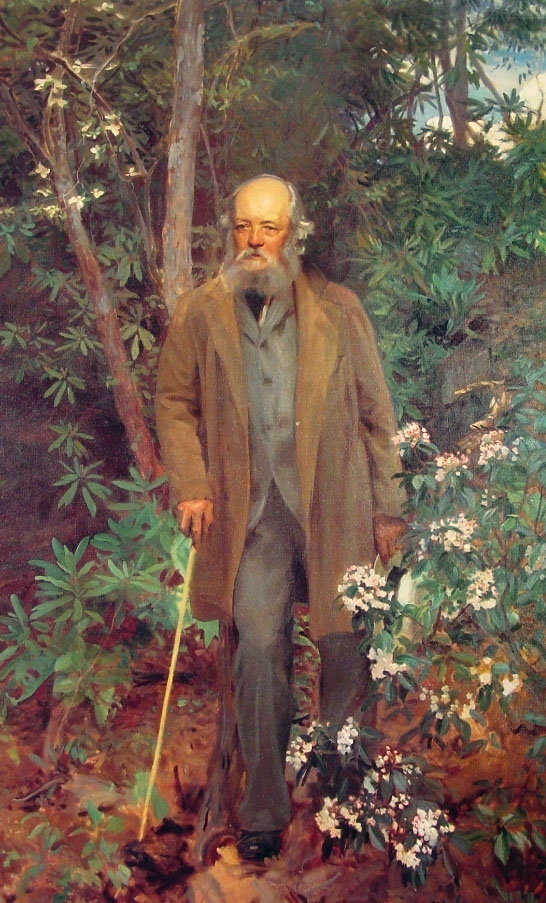
Frederick Law Olmsted, painting by John Singer Sargent, 1895 (collection of the Biltmore Co., Asheville, N.Carolina)

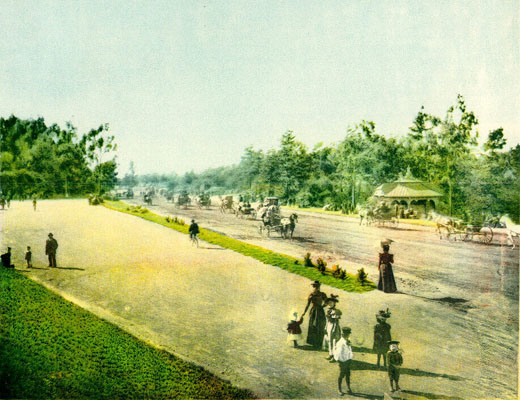
Frederick Law Olmsted did not actually design Golden Gate Park, but given the many similarities between Golden Gate Park and Central Park in New York City (which Olmsted did design, famously!), I think he deserves a lot of the credit!  The citizens of San Francisco had Central Park firmly in mind when they picked a long, rectangular site in the Outer Lands and surrounded it with a grid of streets.  No matter that the underlying topography was sand dunes, Golden Gate Park was never connected in any real way to the natural landscape it replaced.  It was like a magic carpet laid over those dunes in the image of Central Park!  The overall framework of curving roads and paths traversing forests and meadows, punctuated by lakes and jewel-like gardens, statues and rustic structures  .  .  .  all derived from the prototype that Olmsted, and his partner, Calvert Vaux, created in Central Park.

Interestingly, when Olmsted came to San Francisco in 1865, at the invitation of prominent citizens, and surveyed the landscape to determine a suitable location for a large urban park, he proposed an entirely different location and a very different configuration  .  .  .  more attuned to the lay of the land  .  .  .  a swath of park anchored by a large parcel hugging the lower, slopes of Buena Vista and Corona Heights, sweeping down to what is now Civic Center and from there turning north to the Bay in a wide, green boulevard along what is now Van Ness Avenue.  But Olmsted made the mistake of noting that a park in San Francisco could only “compare in the most distant degree to those of New York or London.”  And that was it!  San Francisco would prove him wrong!  A climate of rampant land speculation in San Francisco at the time fanned the flames of civic hubris and sealed the deal that resulted in the selection of the site in the Outside Lands.

Philip Dreyfus captures this San Francisco moment beautifully in his book,  Our Better Nature:  Environment and the Making of San Francisco ( pp. 79-82):

“the fact that its proportions were very similar to those of New York’s Central Park was not an accident.  The intersection of narrow private interests and visions of a greater public good had produced a park site that, at least theoretically, could propel San Francisco forward into the lofty ranks of elite metropolises  .  .  .  San Francisco, whose existence was made possible by reengineering nature in the gold and silver regions to the east, would turn to the mining engineer William Hammond Hall to conjure a wood from a desert.”

But Olmsted provided the basic blueprint!

Posted in history, people | Tagged , , | Leave a comment

report says closing roads increases park use

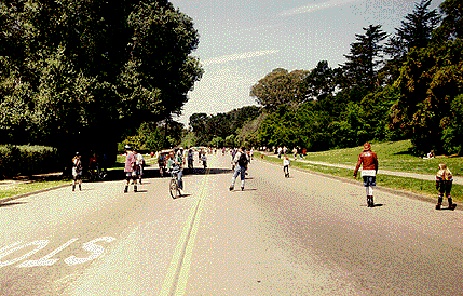
jfk drive on a sunday (photo: http://www.foundsf.org/index.php?title=JFK_Drive)

It’s difficult to measure the public health benefits of urban parks, although intuitively we believe they must be good for our health and well-being.  But some interesting statistics about Golden Gate Park are included in a recent report by the Trust for Public Lands’ Center for City Park Excellence, entitled:  From Fitness Zones to the Medical Mile:  How Urban Park Systems Can Best Promote Health and Wellness .  .  .

“The successful Sunday test conversion of a road to a multiuse trail in New York’s Central Park in 1966 led San Francisco Supervisor Jack Morrison to propose a similar experiment in Golden Gate Park. The one-day, 15-hour car closure of the park’s Music Concourse in January 1967 was so well received that 1,000 enthusiastic supporters—including Mayor John Shelley—showed up at a meeting called by the San Francisco Planning and Urban Research Association to discuss the possibility of future closures. The next month, the park and recreation board voted unanimously to begin Sunday closures of John F. Kennedy Drive in the eastern section of the park.

The public health benefit from Golden Gate’s car-free roadway is hard to overstate, and it’s not just because of physical activity and reduced air pollution. Even more important is increased use. According to careful attendance counts by the San Francisco County Transportation Authority and extrapolations by the Center for City Park Excellence, offering a car-free park road lures as many as 2.7 million more users annually to Golden Gate Park. Regardless of weather, in 2006 park use on car-free Sundays was 216 percent of the use on Saturdays, when the road was not closed.  In other words, for every 100 people out in the park on Saturday, there were 216 walking, skating, running, cycling, stroller-pushing, dog-walking, and otherwise enjoying themselves on Sunday.

Since that time, because of the study, partial road closures have been introduced on some Saturdays, too. In 2007, under the slogan “Healthy Saturdays,” an additional 1.5-mile stretch of the same road was closed for the full weekend between April and September  .  .  .

A calculation by the Center for City Park Excellence indicates that closure of John F. Kennedy Drive seven days a week could increase total park usership by 69 percent, from about 12 million uses to 20 million uses a year. In addition, that larger group would be more physically active.”

http://www.tpl.org/tier3_cd.cfm?content_item_id=23814&folder_id=3208

Posted in health and safety, people, recreation | Tagged , , | 1 Comment

japanese tea garden in full bloom!

tea in the tea garden

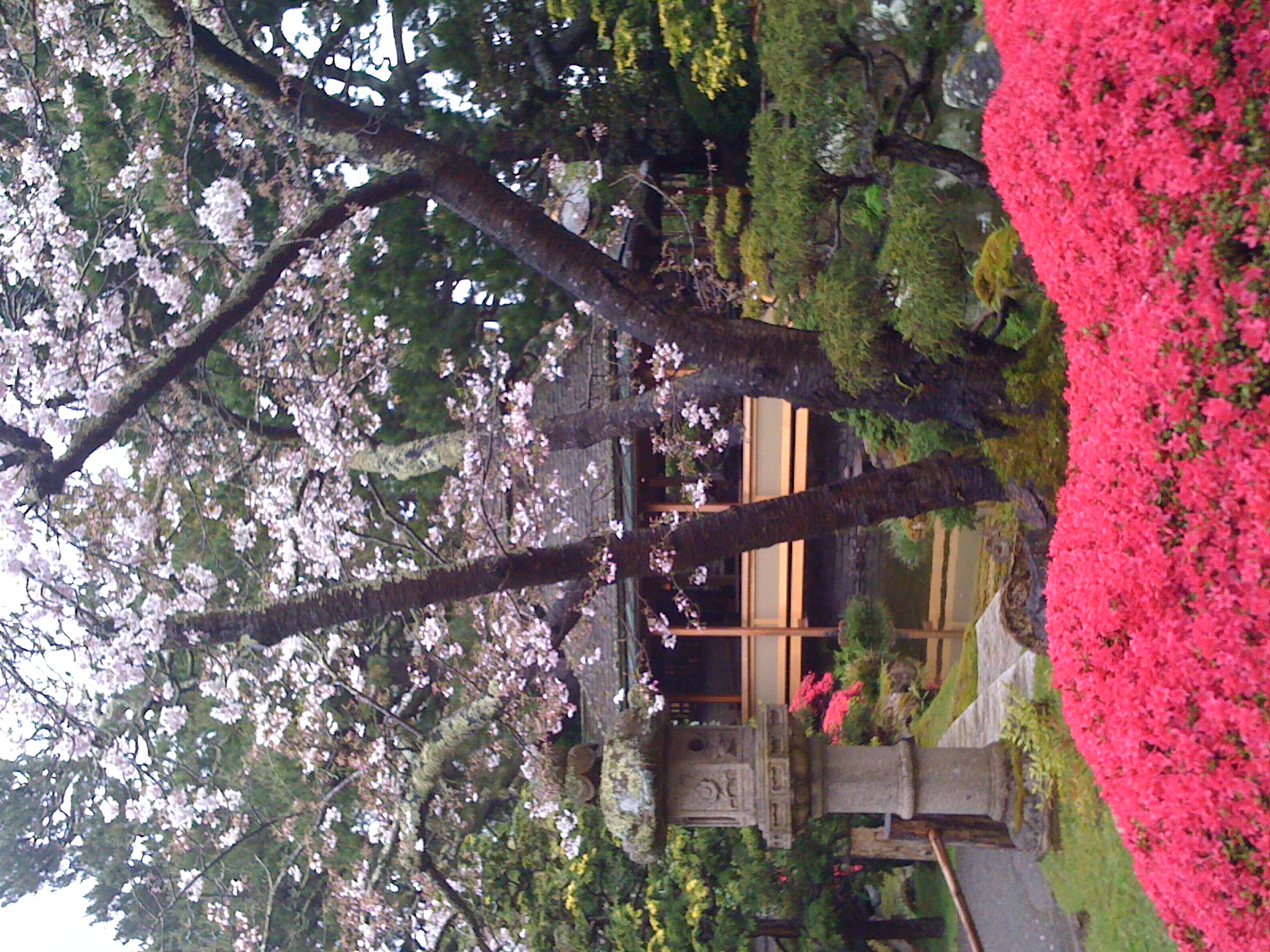
This week is prime time for viewing the Japanese Tea Garden in bloom.  Everything is in bloom at once!

magnolia and azalea in the japanese tea garden, golden gate park, Mar.18, 2010

And cherry blossoms, of course!

Posted in blooming, plants | Tagged | 2 Comments

some gorgeous plein air paintings of golden gate park!

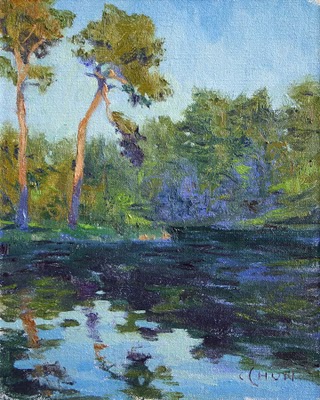
lloyd lake, golden gate park, painting by Cameron Chun, Jan.20,2011

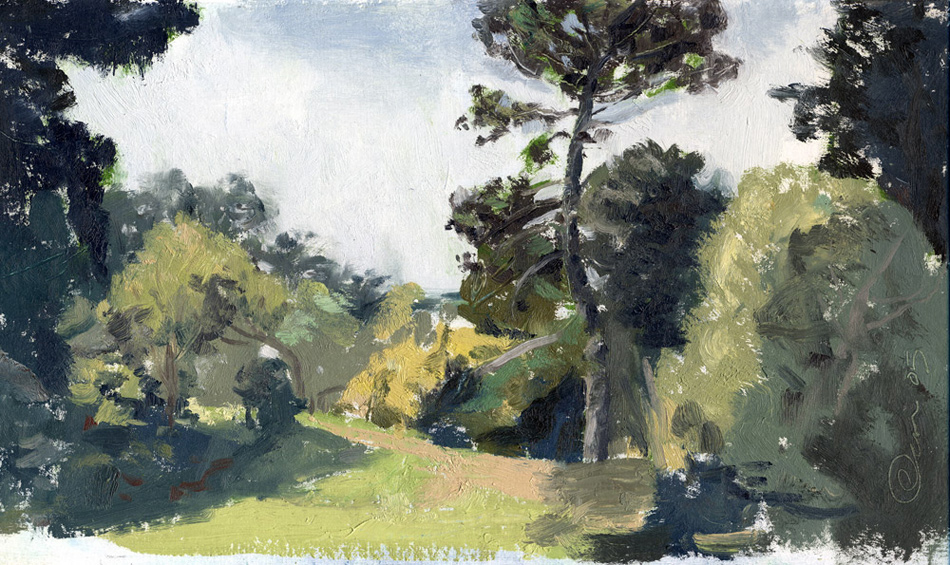
Cameron Chun lives in the Richmond, not far from Golden Gate Park.  I think his paintings beautifully capture the park’s moods in various weather conditions.   I particularly like how he paints the park’s trees  .  .  .  so much character!   Here are some more of his paintings of Golden Gate Park  .   .   .

speedway meadows, golden gate park, painting by Cameron Chun

golden gate park, 6th and JFK Drive, painting by Cameron Chun

For a more of Cameron’s work, check out his website: http://pthaloblue.com/paintings_menu.html

Posted in arts | Tagged , | 2 Comments

a segway through golden gate park?

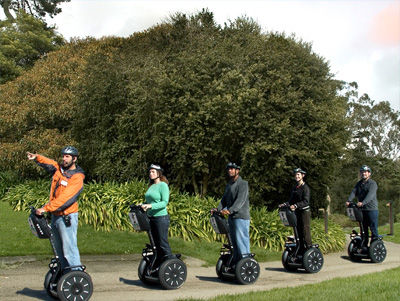
The Segway — a two-wheeled, self-balancing electric vehicle — has been appearing with increasing frequency in Golden Gate Park lately.  I assume that the inventor of this device came up with the name by way of the word segue, which means:  to move smoothly and unhesitatingly from one state, condition, situation, or element to another.  If you’ve ever tried to master the art of moving by means of a Segway, you will understand how aptly the device is named.  It functions like a sophisticated gyroscope which you control by leaning your body weight in the direction you want to go.  Smooth and unhesitating movement is essential!  And to segway properly requires a sort of zen-like mindfulness which, once mastered, is transporting.

We are seeing more of these devices in Golden Gate Park because, according to SF Gate:   “the Recreation and Park Department approved a five-year concession agreement with Electric Tour Co. to run Segway tours in the park, which began last month.

The department, which has been on the hunt for more revenue to stave off service cuts, expects to receive about $100,000 a year from the contract, said Nicholas Kinsey, the department’s assistant director of property management.

As the officially sanctioned tour operator, Electric Tour Co. gets use of the lot behind the band shell for staging and storage, and permission to use the pedestrian paths, Kinsey said. Meanwhile, he said the department is seeing what, if anything, can be done to regulate Segway users in Golden Gate Park not affiliated with the official concessionaire.

The company operates two tours a day, each with no more than nine participants, including the tour guide. The tours cost $70 per person and last about two hours.

Before they set out, participants undergo training on safety rules and how to operate the vehicles. One lesson: Pedestrians always have the right of way, said tour company president Brian Huber.

Less than 20 percent of the tour traverses pedestrian-only paths, such as those that go through the Rhododendron Dell and the redwood grove, Huber said. Some of the more sensitive areas, among them Strawberry Hill in the middle of Stow Lake and a path in the historic Music Concourse, were removed from the original route, Kinsey said.

The Segways on the Golden Gate Park tour average a speed of 4.5 mph, Huber said. The top speed is 10 mph.”

I had the pleasure of trying a Segway last summer in the Great Park in Orange County.  I loved it!  Seems to me a great way to tour a large park and a clever way to raise some funds to help maintain the park. However, not everyone agrees.  To read some of the objections to Segway tours in the park, follow the link at the bottom of this post.  But I suggest trying a Segway ride yourself before you make up your mind.

via Segway tours irritate some in San Francisco.

Posted in recreation | Tagged | 1 Comment

academy roof garden hosts diverse species

roof garden, courtesy of the california academy of sciences

At a symposium last weekend at the Academy of Sciences, Alana Hysert, Academy Naturalist, reported some interesting preliminary data on the living roof.   Recognizing the research and education potential of the new green roof, Hysert has been overseeing a citizen science project, involving 67 volunteers whom she has trained to monitor the plants, insects and birds that are adapting to life up on that aerial garden.   Data collected since June 2009 shows increasing diversity in plants, birds and insects with some species beginning to dominate.  The most prevalent plant species are the beach strawberry (Fragaria chiloensis), selfheal (Prunella vulgaris), and (surprise!) moss.  Nobody knows where the mosses came from, but they appear to be varieties of early-succession mosses, the types that commonly show up in disturbed soil.

The project is monitoring plants in four different quadrants of the roof (NE, NW, SE and SW), and another interesting finding is that in two of the quadrants, there are now slightly more non-native species than native species, while in the other two areas the native species still outnumber the non-natives significantly, although non-natives are appearing there as well.  The roof was originally planted with only native species, so, as expected, non-native plants have begun to colonize the roof.  But why this difference in different areas of the roof?

Twenty orders of Arthropods (insects) have been collected on the roof in both surface and pit traps.   The most abundant order is the one that includes flies/gnats/mosquitos.  Again, there is significant variation between the four areas of the roof that are being monitored.  Identifying insects is a time-consuming (and eye-wearying) process and more volunteers are needed for a more exhaustive analysis of this data.

Brewer’s Blackbirds are the most common bird species sighted on the roof (no surprise!  735 have been counted).    Other commonly sighted birds are Common Raven, Rock Pigeon, European Starling, Red-winged Blackbird and American Crow.  Uncommon birds sighted include Red-masked Parrots, Townsends Warbler, Pelagic Cormorant, Great Egret, American Pipit and Allen’s Hummingbird.  Most exciting was when a newly fledged Red-tailed Hawk landed on the roof from a nest in a nearby tree and the hawks foraged there until the young were able to leave. Also, a pair of Black Eyed Juncos nested successfully on the roof (the first birds to actually make it their home!).

So, that’s the latest report on the living roof.  Stay tuned for future updates!

Posted in california academy of sciences, people, plants, urban ecology, wildlife | Tagged , , , | 1 Comment

hunting wild animals in golden gate park in 1905

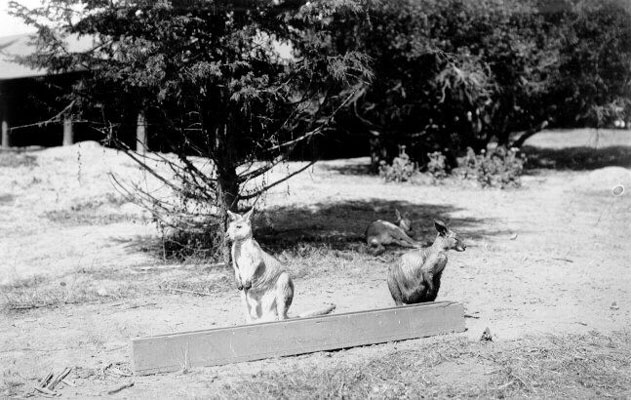
kangaroos in golden gate park, from the SFPL Historical Photographs Collection, n.d.

A full page, illustrated article in the Sunday, August 27, 1905 edition of the San Francisco Call celebrated the many animals housed in the park at that time.  The “head keeper,” William Leland was in charge, and his duties including birthing and bottle-feeding many of them.  The author, Florence Thrale, described large herds of deer, elk and buffalo, a pair of antelope,  seven kangaroos, sixty peacocks, ducks on Stow Lake, two grizzly bear cubs, a sable and a pair of porcupines.  Most of the animals had been born and raised in the park.  This motley menagerie delighted park visitors and was the predecessor to the San Francisco Zoo.

But the real surprise in this story is the description of Leland’s colleague, Officer George William Clark.   Readers were advised:  “If you take your morning constitutional any time between 4 and 9 in the morning or your evening amble between 4 and 7 in the evening and see a sharp-eyed, white-mustached man, lean, wily and active, with a gun in his hand and a checked cap on his head lurking in the park woods, don’t suspect him of poaching.  ”  His job was to shoot “four-footed trespassers.” His take included six coyotes that year, as well as six gray foxes and thirty-seven weasels just that summer.  Also hawks and king-fishers (the nature of this threat is unclear) and numerous stray dogs and cats.

Another reminder of how times have changed!

Posted in "lost" golden gate park, history, people, wildlife | Tagged , | 2 Comments

mystery bird identified: western gull, Larus occidentalis

Mystery bird: western gull, Larus occidentalis

This leucistic individual is difficult to ID, but after staring at this bird through a magnifying glass for 3 hours and comparing it with a hundred or so photographs, I think I’ve got it!

Western gull, Larus occidentalis, photographed at Golden Gate Park, San Francisco, CA, USA.

Question:  This beautiful North American mystery bird is rather special when compared to its brothers and sisters. Can you name the species and tell me what is so special about this individual?

Response: The photographer says this is a leucistic western gull, Larus occidentalis. Because the individual lacks most (all?) pigments, I am relying exclusively on morphological features to ID this bird:

The bill: a western gull has a large, heavy bill with a pronounced hook. The gonys (on the lower mandible where the red spot is) is enlarged and curves up sharply to the bill tip. When I look at a western gull’s bill, it looks larger at the gonys than at the base to my eye.

The forehead: a western gull has a flatter forehead than a glaucous-winged gull.

I admit this is a very difficult identification from just one photograph, especially when there’s not another gull in the image to compare to, but I’ve been staring at photographs for the past 3 hours (using a magnifying glass!) and this bird does look like a good western gull from this one photograph. If anyone manages to get some DNA from this bird and does a little sequencing of this bird’s mitochondrial genes, I’d be very interested to write about what they’ve learned if they wish to share their findings with me. (hint, hint!)

You are invited to review all of the daily mystery birds by going to their dedicated graphic index page.

via Mystery bird: western gull, Larus occidentalis | Science | guardian.co.uk.

Posted in wildlife | Tagged , , | Leave a comment