owl sighting on strawberry hill

Last night, arriving at the top of Strawberry Hill in Stow Lake at dusk, just in time to catch the last pink and orange of the sunset,  I heard a characteristic, throaty “who-whoooooo.”  Several people were standing around, under a tall stand of cypresses, looking upward.  And there, sitting on a naked branch, was a Great Horned Owl, unconcerned about his audience below.  Quite a sighting!  Soon he lifted gracefully off the branch and swooped off to another tree, out of our view.  We sighed with satisfaction and dispersed.

Posted in wildlife | Leave a comment

controversial gardens to replace recycling

“Nothing lasts forever, even in San Francisco, the city where you can’t sharpen a pencil without conducting an environmental impact report.

For decades, the Haight-Ashbury Neighborhood Council Recycling Center has [provided] recycling services and native plants to the locals.

But times are changing. San Francisco now has curbside recycling pickup, and the city is ready to shutter old HANC. After 36 years, the Recreation and Park commission unanimously voted to hand it an eviction notice this week.”

via Controversial Gardens to Replace Obsolete Recycling Center | NBC Bay Area.

Posted in guerilla gardeners, infrastructure, recycling | 1 Comment

what is a park for?

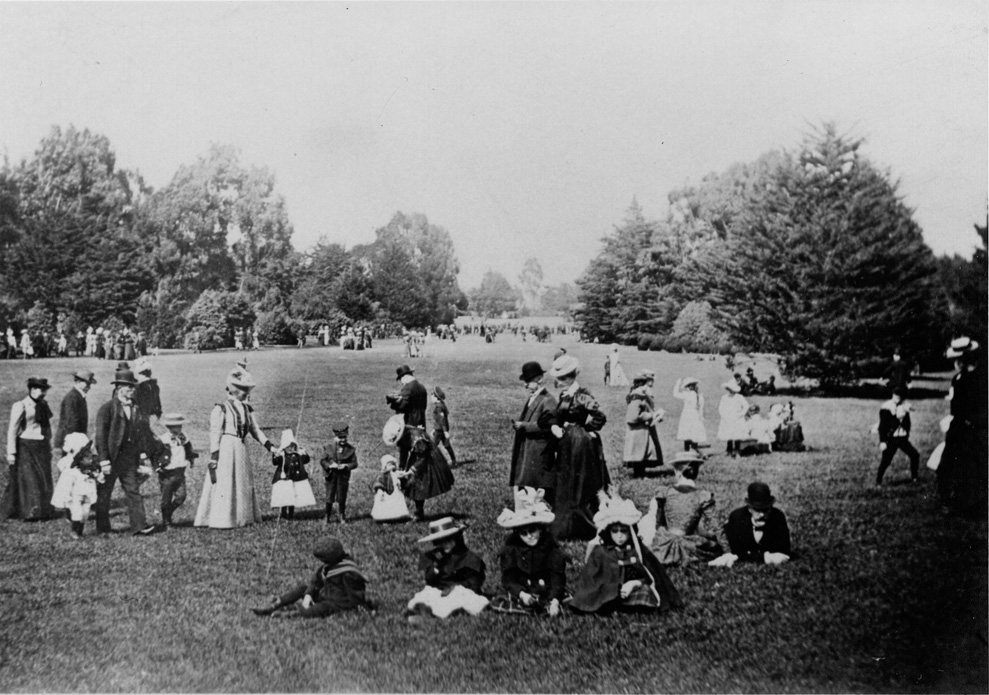
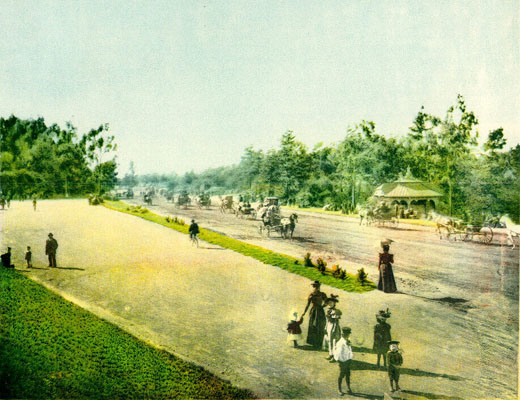
golden gate park, ca. 1896 (sfpl historic photograph collection)

This week a red-hot public quarrel erupted over the proposed eviction of the HANC recycling center that has been occupying a half acre of park land next to Kezar Stadium for the past 30 years or so.  Recreation and Park staff are proposing to replace the recycling center with a decorous community garden, which they feel is more appropriate than a recycling center in Golden Gate Park.  Their proposal would retain the native plant nursery that has been thriving on the site among the recycling center’s bins, chain link fences and oil-stained asphalt over the past 7 years in an unlikely partnership that is probably unique in public parks of this ilk around the country.

Listening to the various arguments, pro and con, presented by a lengthy parade of speakers before the Commission last night, I thought back to the founding of Golden Gate Park and the long period of public wrangling that preceded that historic moment in 1870, when the city finally triumphed and evicted the squatters on the Outside Lands to create the park.  And the even longer squabble that preceded the establishment of Central Park in New York City, which was the model for Golden Gate Park and other similar parks across the country.  And the ideological battles that Frederick Law Olmsted and John McLaren fought during their long careers to protect a certain vision of parks:  as oases of Nature in the City where bourgeois decorum would rule and rub off on those “less favored by fortune.”   From the beginning park police and park gardeners had the job of enforcing this vision, and it was always a hard sell, as this excerpt from the New York Times, Dec. 28, 1877 illustrates:

Officer Meaney yesterday, while on duty in the upper portion of Central Park, espied a large bonfire blazing brightly in the woods. He approached the burning pile, and was astonished to discover a middle-aged man, apparently immersed in deep thought, standing with his back to the burning brushwood, warming his coat-tails, and seemingly unconscious of his surroundings and position. In close proximity to the bonfire was a curiously-constructed hut, built without any regard for architectural design, and composed merely of several rough-hewn logs of wood, mingled with freshly-cut branches of trees, which, being entwined around the logs, helped to support and brace them. In this romantic residence, the interior of which contained neither furniture nor bedding, the stranger had determined to reside, at least temporarily, away from the strife and busy turmoil of the great Metropolis.

In a broad sense, the dispute that flared up over the HANC recycling center has been going on for nearly a century and a half and the arguments are familiar:   who are parks for? what are they for?   how subject to public process and public opinion should they be? who gets to control them?

Maybe it’s the “nature” of public parks to keep these arguments alive?  That seems like a good thing.

Posted in guerilla gardeners, history, infrastructure, recycling | Leave a comment

golden gate park field guide (phone app)

This is a pretty cool new phone app — a field guide to golden gate park — developed by the Academy of Sciences.  It’s interactive, so users can help build a data base on plants, wildlife and other things of note in the park.  It’s geared more towards the natural than the cultural side of the park, but with some history and cultural information thrown in.  We’ll be keeping an eye on this, to see how it grows!

Golden Gate Park Field Guide: California Academy of Sciences.

Posted in california academy of sciences | Leave a comment

get a daily dose of green space

“First, the bad news: Americans are suffering from an acute case of ‘outdoor deprivation disorder,’ and the effects on physical and mental health are rising fast. Children aged 8 to 18 today spend more time than ever using electronic media indoors — seven and a half hours a day, according to the Kaiser Family Foundation — and less time in outdoor unstructured activity. In response to the No Child Left Behind law, 30 percent of kindergarten classrooms have eliminated recess to make more room for academics.

The resulting lack of physical activity and a growing disconnect with the natural environment have been linked in a host of studies to obesity and obesity-related diseases in children and adults, including Type 2 diabetes, high blood pressure, heart disease, asthma and nonalcoholic fatty liver disease, as well as vitamin D deficiency, osteoporosis, stress, depression, attention deficit disorder and myopia. Dr. Daphne Miller, a family physician affiliated with the University of California, San Francisco, calls them ‘diseases of indoor living.’

Now, the good news: There’s a simple remedy — get outside and start moving around in green spaces near and far, most of which are free. A consortium of physicians, health insurers, naturalists and government agencies have banded together to help more people of all ages and economic strata engage in health-enhancing physical activity in parks and other natural environments.”

via Get a Daily Dose of Green Space – Personal Health – NYTimes.com.

Posted in health and safety | Leave a comment

free admission?

On August 7 this year, the Botanical Garden in Golden Gate Park began to charge admission for the first time since it opened to the public seventy years ago.   Nobody likes to have to pay for something that was formerly free of charge, so it’s no surprise that there has been some grumbling. But actually,  maybe it’s even more surprising that the botanical garden remained open to the public free of charge for so long?

Other special gardens in the park have been charging admission for some time.  When the botanical garden in Golden Gate Park first opened to the public in 1940, it joined the Japanese Tea Garden and the Conservatory of Flowers as special gardens within the larger park, but all were open to the public free of charge.  A friend who grew up in San Francisco fondly remembers playing in both the Japanese Tea Garden and the Conservatory as a child, while the adults played tennis at the nearby courts.  The Tea Garden only began to charge admission sometime in the mid to late 1980s.  The Conservatory of Flowers instituted an admission fee in 2003, when it reopened to the public after undergoing extensive renovation.

Because these fees have been adopted gradually over a period of years, it’s easy to overlook the fact that such changes signal a shift in thinking about public parks and how they should be maintained and managed for public use.  In the nineteenth century public parks were part of a great social experiment, the hypothesis being that exposure to Nature was morally and socially beneficial to the society at large.  Parks were designed to be free of charge to people across the social spectrum, but especially those “less favored by fortune.”  Parks were also frequently home to cultural institutions such as art and natural science museums, zoos and botanical gardens, which were products of the same era.

In fact, the great nineteenth-century social reform movement produced many public cultural institutions that we now take for granted: parks, libraries, museums, theaters.  The thinking was that the society as a whole would benefit from the exposure to Nature and Culture that such institutions offered.  Of course, the seeds of public-private partnerships to support these cultural institutions were also sown in the nineteenth century, with New York City leading the way.  In the last quarter of the century legislation was passed in New York incorporating many cultural institutions and authorizing the city to build new facilities and to lease them and the parkland on which they often sat back to the newly formed private entities.  These public-private agreements usually stipulated that the city would provide the land, facilities and funds for maintenance and security and in return the new private institutions would develop cultural services and collections that would be made available to the public.

The public-private partnership model did not apply to public parks until fairly recently;  again New York City led the way with the establishment of the Central Park Conservancy in the last quarter of the twentieth century.  This nonprofit organization entered into a public-private agreement with the city and rescued Central Park from near ruin following years of diminishing public funding.  This model has been followed in San Francisco in the Presidio Trust and the Friends of the San Francisco Botanical Garden.  But there is no umbrella nonprofit for Golden Gate Park, our most venerable public park.  Why is that?

http://www.centralparknyc.org/
Posted in california academy of sciences, de young museum, history, san francisco botanical garden | 2 Comments

ferlinghetti in golden gate park

In Golden Gate Park That Day …
by  Lawrence  Ferlinghetti

In Golden Gate Park that day
a man and his wife were coming along
thru the enormous meadow
which was the meadow of the world
He was wearing green suspenders
and carrying an old beat-up flute
in one hand
while his wife had a bunch of grapes
which she kept handing out
individually
to various squirrels
as if each
were a little joke

And then the two of them came on
thru the enormous meadow
which was the meadow of the world
and then
at a very still spot where the trees dreamed
and seemed to have been waiting thru all time
for them
they sat down together on the grass
without looking at each other
and ate oranges
without looking at each other
and put the peels
in a basket which they seemed
to have brought for that purpose
without looking at each other

And then
he took his shirt and undershirt off
but kept his hat on
sideways
and without saying anything
fell asleep under it
And his wife just sat there looking
at the birds which flew about
calling to each other
in the stilly air
as if they were questioning existence
or trying to recall something forgotten

But then finally
she too lay down flat
and just lay there looking up
at nothing
yet fingering the old flute
which nobody played
and finally looking over
at him
without any particular expression
except a certain awful look
of terrible depression

Lawrence Ferlinghetti, [“In Golden Gate Park That Day”] from Coney Island of
the Mind. Copyright © 1958 by Lawrence Ferlinghetti.

Posted in arts | Leave a comment

charlie chaplin in golden gate park

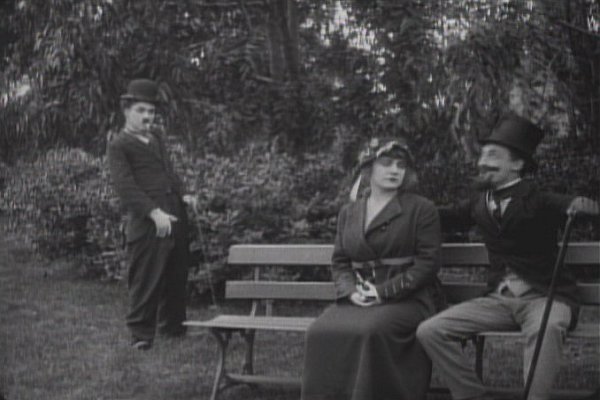
from charlie chaplin's film "a jitney elopement" filmed in golden gate park (1915)

Charlie Chaplin filmed several movies in Golden Gate Park, including “A Jitney Elopement” (1915) pictured above.  In this romance Chaplin plays the true love of Edna, whose father wants her to marry the wealthy Count He-Ha instead.  What place could be more appropriate for trysting lovers than Golden Gate Park?

Here’s a link to another Chaplin movie, “In the Park,” (1915) which also has scenes filmed in Golden Gate Park;  watch the beginning and see if you recognize the park from nearly 100 years ago!

http://www.archive.org/details/CC_1915_03_18_InThePark

(Thanks to Susan Chainey for this fun link to film and park history!)

Posted in arts | 1 Comment

the machine in the garden?

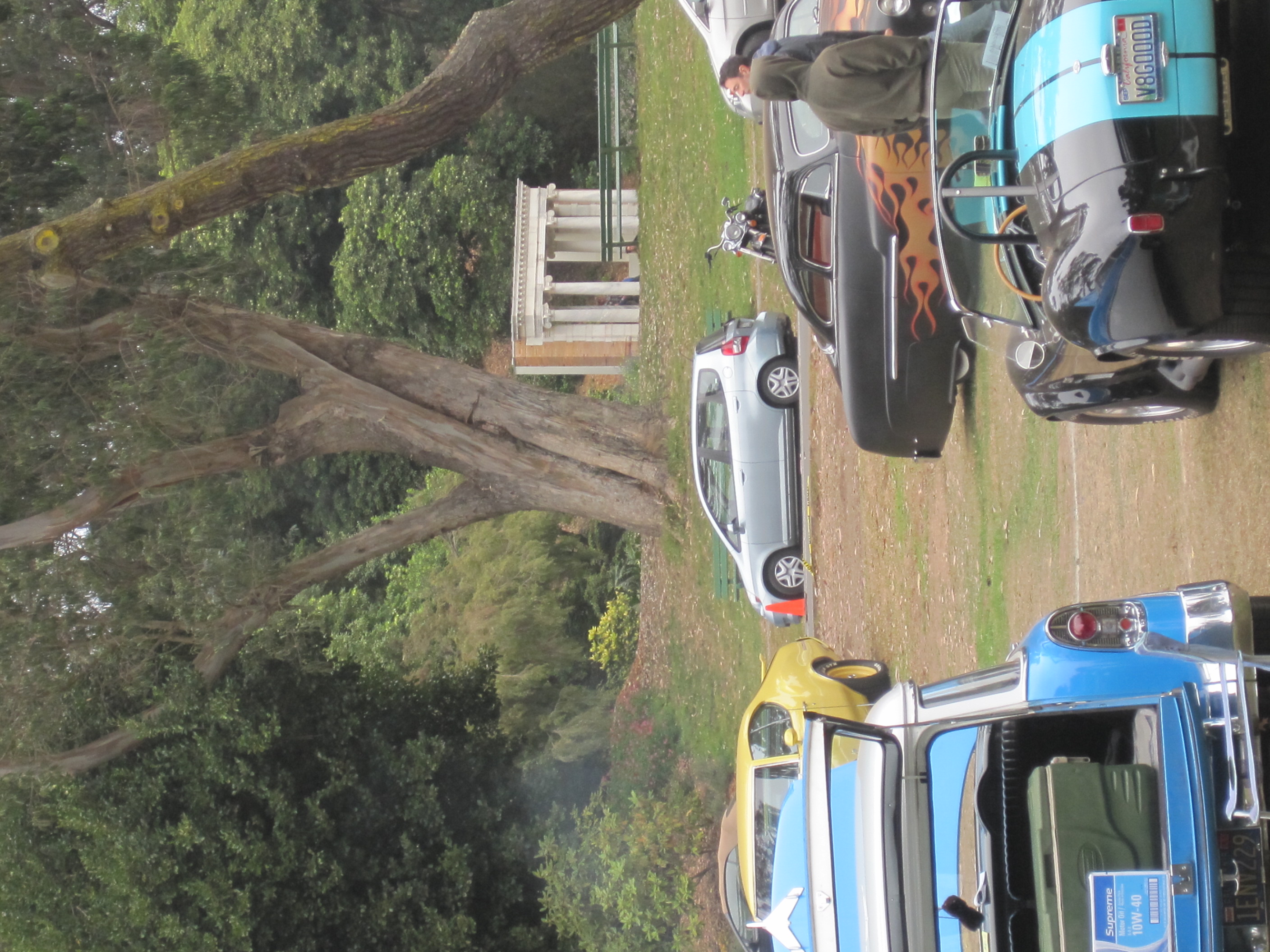
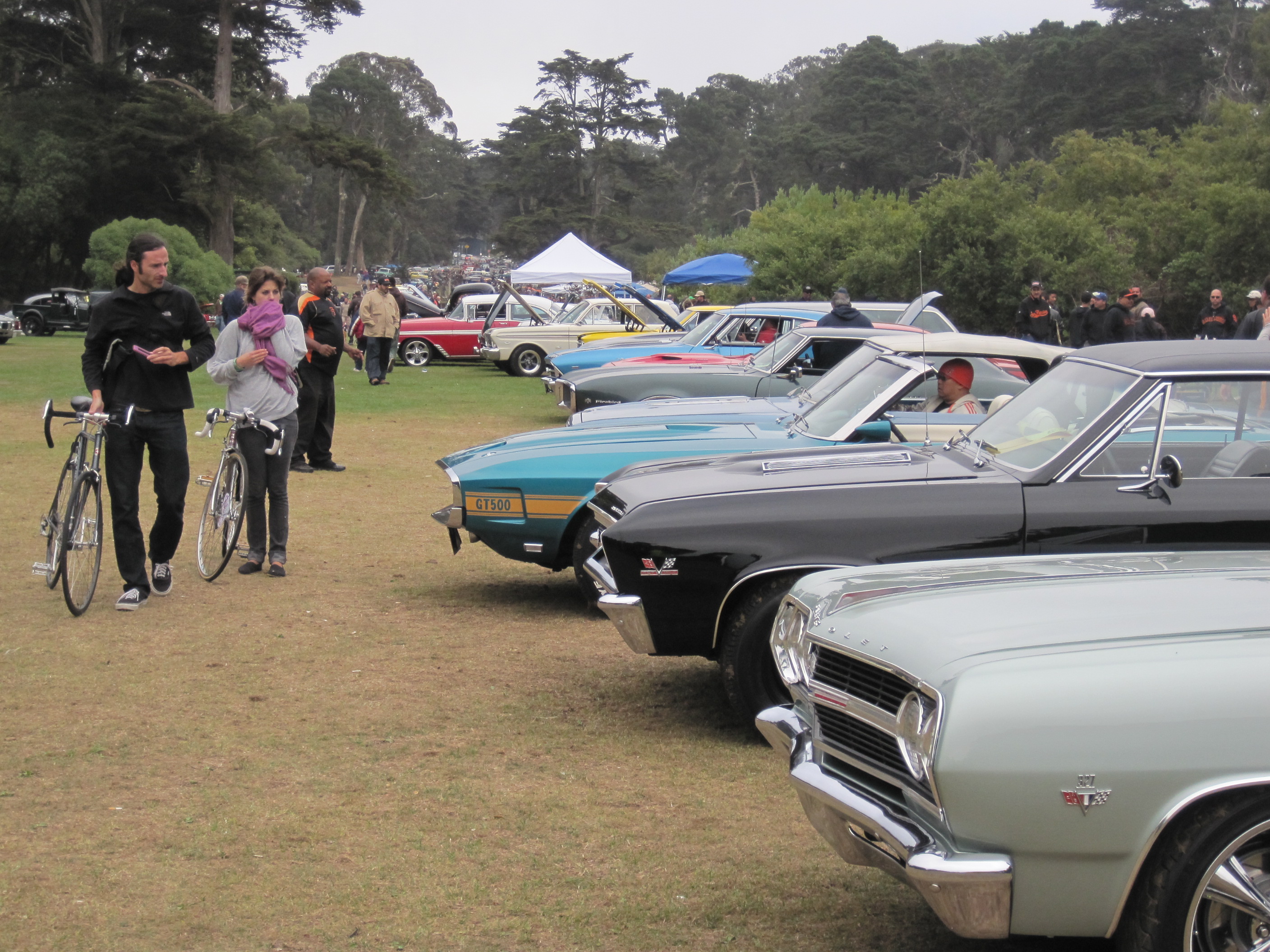
Tommy's Old Car Picnic, Golden Gate Park, 10/16/10

When Frederick Law Olmsted and Calvert Vaux designed Central Park in New York in the mid-nineteenth century, they depressed the four cross-town roads below the grade of the park, to prevent the hustle and bustle of city traffic from interfering with the tranquil effects of Nature they aimed to create in the park.

This ground-breaking decision in Central Park addressed a conflict that has plagued the custodians of urban parks every since, and become even more challenging since the advent of the automobile.  It’s an example of a deep-seated contradiction in our culture, identified with great perception by the literary and cultural historian Leo Marx, in a book entitled:  The Machine in the Garden:  Technology and the Pastoral Ideal in America (Oxford University Press, 1964, 2000).   In this book Leo Marx discusses many instances in which “the pastoral ideal has been incorporated in a powerful metaphor of contradiction” in American culture.  He cites examples from American literature and the culture at large to illustrate how “an inchoate longing for a more ‘natural’ environment” often butts up against “the hard social and technological realities” of our contemporary, technologically-driven society.  I was so reminded of this contradiction a couple of weeks ago, coming across Tommy’s Old Car Picnic in Speedway Meadow in Golden Gate Park.

Posted in events in Golden Gate Park, history | Leave a comment

interesting history of controversy over native plants

http://arnoldia.arboretum.harvard.edu/pdf/articles/646.pdf

Posted in history | 3 Comments