tour de fat: bike and beer ballyhoo in golden gate park

‘September is the best time of the year in San Francisco.

The sun is shining, the cool weather is behind us and the festival season is in full bloom. For residents who ride bikes, September brings with it one of the most exciting events of the year: the Tour de Fat, on Saturday at Lindley Meadow in Golden Gate Park.

The annual free bike and beer ballyhoo, which will hit 13 cities across the country this year, is hosted by the New Belgium Brewery Co. of Fort Collins, Colo.; it’s named after its popular Fat Tire amber ale.

Now in its 12th year, the festival continues to expand on its goal to “roust a city’s inner city cyclist” by offering a full day of music, art and bicycle fun. This year, with the beer garden separated from the rest of the event, it’s an all-ages, family-friendly event.

Festivities begin with an 11 a.m. costumed ride through the park (registration starts at 10 a.m.) and continue through the afternoon with music from indie bands the Dovekins and Free Energy, as well as the renegade parade stylings of the Extra Action Marching Band. There will also be a fiery stunt bike performance and a collection of crazy, carnival-like bikes to ride.

The day culminates with one partygoer giving up his gas-guzzling car for a custom, handcrafted steel commuter bike. Complete with fenders, racks and panniers, this bike is designed to do everything your car could do – except pollute.

“The car-for-bike trade continues to inspire me,” New Belgium spokesman Bryan Simpson says. “It’s always so exciting to see someone enter a new car-free phase of life.”

The festival also raises funds for the San Francisco Bicycle Coalition and the Bay Area Ridge Trail Council – nearly $50,000 last year. New Belgium has raised more than $2 million for bicycle nonprofits across the country.

In keeping with the brewer’s message of green living, the festival will be powered through solar and biofuel and incorporate recycling and compost bins. Last year’s festival produced only 12 pounds of trash for 6,500 people, according to the bicycle coalition, making it one of the greenest San Francisco festivals of the year.

No matter your reason for riding – community, the environment, fun – the Tour de Fat will probably reinforce why you do it.

11 a.m.-4 p.m. Sat. Free. Lindley Meadow, Golden Gate Park, S.F. www.sfbike.org/?fat.’

via Tour de Fat: Bike and beer ballyhoo hits city.

Posted in events in Golden Gate Park, recreation | Tagged , , | Leave a comment

landmark windmill gets new dome

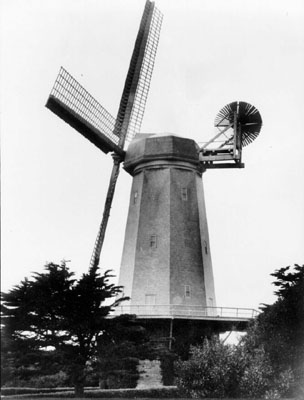
‘San Francisco officials and international representatives will celebrate a crowning achievement this morning when a refurbished dome is placed on top of the Golden Gate Park windmill that is considered the largest of its kind in the world.  The 106-year-old Samuel Murphy Windmill, also known as the South Windmill, will receive its restored 64-ton copper dome at a “capping” ceremony at 11 a.m., a San Francisco Recreation and Park Department spokeswoman said.  The windmill, which is one of two traditional Dutch-style windmills in Golden Gate Park, has been waiting more than 10 years for its cap to return after it was shipped to The Netherlands for restoration, according to the park department.

The Murphy Windmill, named after a local banker and benefactor, was constructed in 1905 after the successful creation of the Dutch Windmill. The Dutch Windmill, which now sits next to the Beach Chalet restaurant, was built in 1902. At one time, both windmills were responsible for pumping as many as 1.5 million gallons of water everyday, according to the park department.  But through natural corrosion and man-made neglect, the Murphy Windmill sustained significant damage. Its powerful sails, considered the longest in the world, were detached and abandoned and its wooden wraparound deck was also destroyed.

Now considered to be treasured landmarks, a campaign to save the windmills was organized more than 10 years ago and a major milestone for the restoration efforts will be celebrated today.  San Francisco Recreation and Park Department General Manager Phil Ginsburg, Supervisor Carmen Chu and Dutch Consul-General Bart van Bolhuis will attend the dome placement ceremony, which will take place at the Murphy Windmill near Martin Luther King, Jr. Drive and Great Highway.’

via SF: Golden Gate Park’s landmark windmill gets new dome – San Jose Mercury News

Posted in history, infrastructure | Tagged , | Leave a comment

crasher livens up golden gate park wedding

‘So much planning goes into making your wedding the most perfect day of your life – the location, the guests, the flowers, the cake. But, as always, it’s the things you can’t plan for that can ruin everything. Consider the case of one unfortunate couple whose Golden Gate Park wedding this past weekend got thrown into disarray by one unwelcome guest.

Police said a well-dressed but sauced wedding crasher caused a disturbance during festivities at the Conservatory of Flowers Saturday night and then returned after being ejected, lobbing his shoe at the DJ, getting pepper-sprayed and then arrested.

Officers were called to the reception at 11:45 p.m. Saturday to investigate the disturbance and found a shoeless, bleary-eyed 33-year-old San Francisco man, Park Station Capt. Denis O’Leary said.

Guests said the drunken man had wandered into the reception and began causing a disturbance, according to O’Leary.

“Some of the guests got him to leave and then he forced his way back in,” O’Leary said. “The drunk came back in throwing his shoe.”

The shoe flew in the direction of the wedding DJ, who then pepper-sprayed the man, “but two of his friends got sprayed as well,” O’Leary said.

Officers then arrived and arrested the man.

Other than the wedding crasher’s missing shoes, “he was dressed like he belonged there,” O’Leary said. The man was wearing a white shirt, gray tie, and a black-and-gray vest over black slacks.

The man spent the night at Park Station until he sobered up.

“Hell of wedding, don’t you think?” said O’Leary.

According to its website, the Conservatory of Flowers rents out for a wedding ceremony and reception for $8,900. The venue “offers a beautiful, unique setting that will make any engagement unforgettable!” Indeed.’

via Crasher livens up Golden Gate Park wedding in San Francisco | Ari Burack | Crime | San Francisco Examiner.

Posted in events in Golden Gate Park, safety | Tagged , | 1 Comment

victory gardens in golden gate park

golden gate park victory gardens, 1943 - sfpl historic photograph collection

Urban farming and community gardening have been time-tested in San Francisco.  Few people today realize that Golden Gate Park was a productive urban farm during World War II.

‘Victory Gardens, also called “war gardens” or “food gardens for defense”, were gardens planted both at private residences and on public land during World War I and World War II to reduce the pressure on the public food supply brought on by the war effort. In addition to indirectly aiding the war effort these gardens were also considered a civil “morale booster” — in that gardeners could feel empowered by their contribution of labor and rewarded by the produce grown. These gardens produced up to 41 percent of all the vegetable produce that was consumed in the nation.

City Bountiful: A Century of Community Gardening in America, Laura Lawson

Throughout the country people plowed front yards, lawns, back yards, flower gardens, and vacant lots to grow their own vegetables. Even public land was put to use, from the lawn at San Francisco City Hall to the Boston Commons to portions of San Francisco’s Golden Gate Park. San Francisco’s victory program became one of the best in the country. There were over 250 garden plots in Golden Gate Park.  Every park in the city had gardens and many vacant lots were used for growing vegetables.’

via ~ Victory Gardens History ~.

Posted in "lost" golden gate park, eating, health and safety, history, plants | Tagged , , , , , , , , | 1 Comment

coyotes in golden gate park

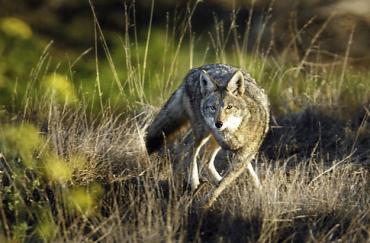
photo by Scott Sommerdorf, The Chronicle, 8/20/11

It seems we may be seeing coyotes more frequently in Golden Gate Park, according to this recent column by C.W. Nevius, for SF Gate:

‘Four years ago, the city was in a tizzy over coyotes. It culminated with two of them getting shot and killed in Golden Gate Park.

Now the message is tamer. At a neighborhood meeting organized by Assemblywoman Fiona Ma in the Richmond District on Friday, animal experts kept it simple: They’re here. There are more of them than ever. Get used to it.

“The whole nation is having problems with coyotes,” said Kent Smirl, a Department of Fish and Game lieutenant who has coordinated a coyote-watch program in Southern California.

San Francisco is actually behind much of the rest of the country. Between April 2010 and July of this year, there were 122 coyote “incidents,” meaning some kind of physical interaction with humans, in Southern California and just 29 here in the north.

San Francisco may be late to develop a coyote population – Project Coyote Director Camilla Fox says they’ve arrived in the past 10 years – but, as usual, we’re way ahead in the range of reactions. It starts with whether you say KI-oat-ee or KI-oat and goes from there.

Pet fanciers are horrified that a predator is stalking the public parks. And, says Eric Covington, a district supervisor for USDA Wildlife Services, concerns about pets are not entirely misplaced .  .  .

Conrad Jones, an associate wildlife biologist with Fish and Game, says one study, based in Malibu, found that 13.6 percent of coyote scat contained cat remains. (Fox says other studies show a much lower percentage.)

So coyotes are definitely a threat to pets, particularly cats out wandering at night or off-leash dogs crashing through the underbrush in parks.

But as Smirl says, “We don’t have a four-legged problem; we have a two-legged problem.”

The coyotes first arrived in the Presidio, probably after crossing the Golden Gate Bridge. Since then they’ve spread through the city’s parks and beyond. They are regular sights on golf courses, and Johnson says he’s seen them at Fisherman’s Wharf.

The reason is simple. The city is a coyote buffet line.

As Jones says, “What’s food for a coyote? Everything.”

It’s not just that food is readily available from unsecured garbage cans. There’s also pet food left out in backyards and bird feeders. Worse yet are well-intentioned folks who think they are helping the situation by feeding the coyotes.

They are not only missing the point – coyotes self-restrict their population based on available food, so the feeders are actually increasing the number – but it is dangerous. Coyotes that become dependent on handouts lose their fear of humans  .  .  .

The flip side of that situation is that some are so enamored of urban coyotes that they refuse to hear anything bad about them. Those are the people who say that the coyotes who were killed in Golden Gate Park just administered a light nip to a dog. Covington says it was more than that. The vet bill ran to thousands of dollars.

The debate is sure to continue.’
via Coyotes in city to stay, so protect pets and food.

For some many beautiful photographs and stories about coyote encounters in San Francisco see Janet Kessler’s blog,  Coyote Yips:  http://coyoteyipps.com/

Posted in wildlife | Tagged , , , , , , | 4 Comments

dahlia! S.F.’s official flower in bloom

‘A leftover dahlia that came with their new San Francisco home is what hooked Gerda Juul and her husband, Erik, in the 1950s.

“It sort of went on from there,” she recalled, to buying bulbs at the Dahlia Society of California’s annual sales, to a membership (free with the purchase of a dozen bulbs). “Then, about 35 years ago, after we moved to the Sunset, we seriously started to grow and show and hybridize.”

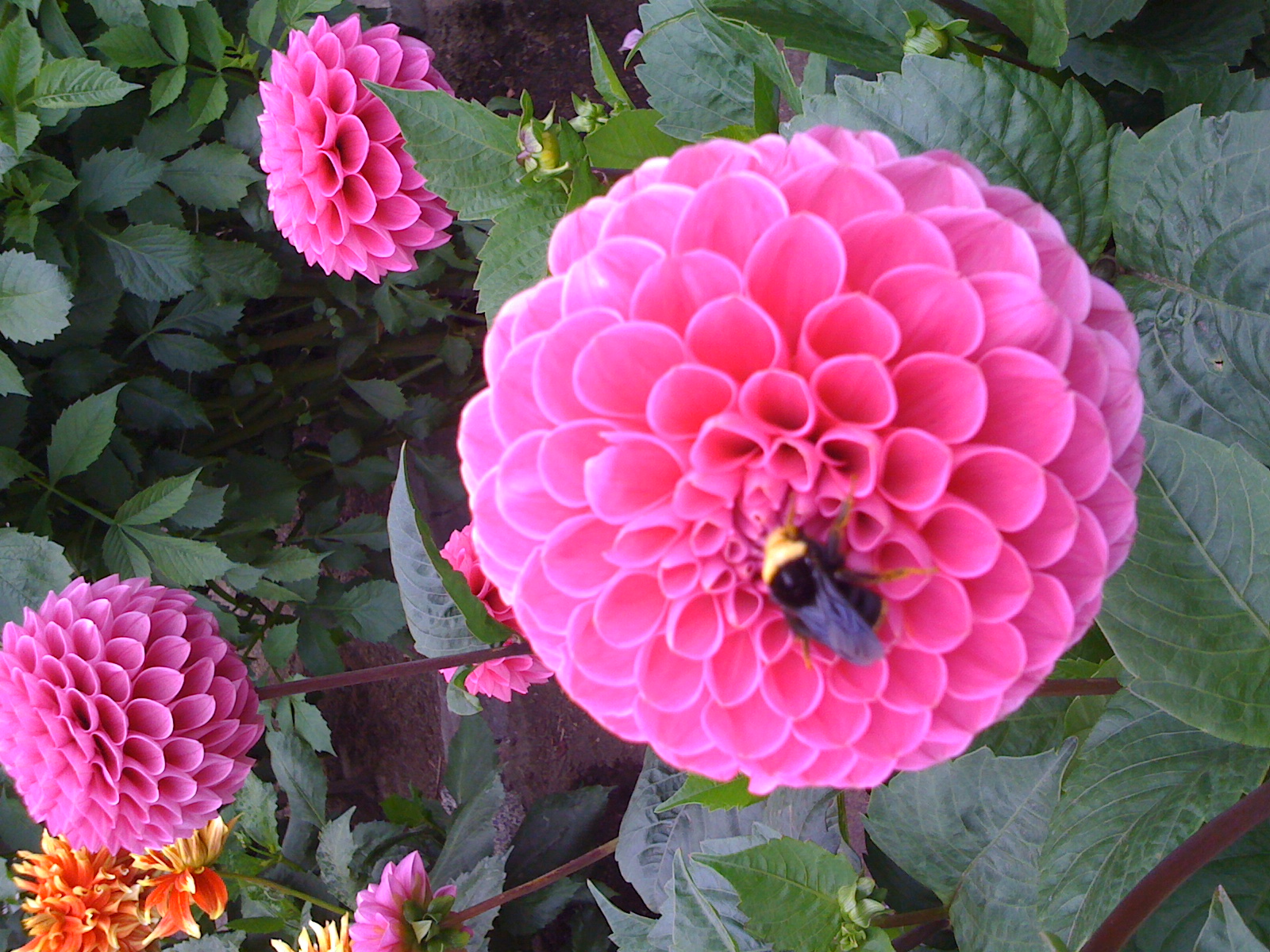
The dahlia mystique goes back to pre-Conquest Mexico, where the Aztecs cultivated them. Today, it’s Mexico’s national flower. It’s also the official flower of San Francisco – Mayor Gavin Newsom has declared Saturday to be Dahlia Flower Day.

A Spanish botanist, Vicente de Cervantes, sent the seeds of several natural species to Madrid in 1789; seeds collected by the explorer Alexander von Humboldt reached Paris and Berlin in 1804. Those founding seeds gave rise to a multitude of hybrids. The American Dahlia Society recognizes 18 form categories, based on the shape of the flower head (ball, pompon, stellar) or its resemblance to other kinds of flowers (anemone, cactus, water lily, peony, orchid). There’s also a flower-size hierarchy, from AA on down. The group’s annual show, this weekend at the County Fair Building in Golden Gate Park, puts ever more people in danger of dahlia addiction  .  .  .

Beyond their home garden, the Juuls helped maintain the Dahlia Dell in Golden Gate Park for 15 years  .  .  .  Other volunteers help tend the dell, with the park providing space, soil and rototilling.’

Don’t miss seeing these spectacular flowers growing in the park this month!

via Hello, dahlia! S.F.’s official flower in bloom.

Posted in blooming, people, plants, san francisco botanical garden | Tagged , , | 1 Comment

searching for spanish monastery stones in golden gate park

monastery stones used at the library terrace garden, san francisco botanical garden, golden gate park

Walking in Golden Gate Park you may notice some ornately carved stones, segments of fluted pillars, arches, sculptural reliefs worn smooth by time.  These are remnants of  a medieval Spanish monastery, now scattered throughout the park and put to various uses, from retaining walls to sculptural accents.

Apparently “the stones originally made up the 12th century Cisterian monastery of Santa Maria de Ovila in Spain. The abandoned buildings were purchased by William Randolph Hearst in 1931, part of his elaborate Wyntoon estate building project in Northern California. It took eleven ships to bring all of the stones to the U.S. where they were held in a San Francisco warehouse.

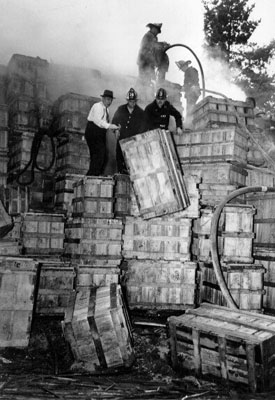
When the Depression began to take its toll on Hearst’s fortunes, he abandoned the project and sold the stones to the city. San Francisco made plans to rebuild the structure in Golden Gate Park – a project immediately made more complicated when a fire destroyed all of the packing crates showing the key markings for reconstruction.

golden gate park, crates holding monastery stones on fire, 1941 (SFPL historical photograph)

Finally, in the 1960s, the remaining stones were distributed throughout the park including the Strybing Arboretum Library Terrace Garden and the Japanese Tea Garden.

Elsewhere in the park, two so-called “Druid circles” hide in the wooded areas and act as sacred spaces for occasional ceremonies. Further north in Sacramento Valley, the remainder of the stones are getting an unexpected new life as the Chapter House of the Abbey of New Clairvaux.”

via Spanish Monastery Stones located in San Francisco, California, US | Atlas Obscura | Curious and Wondrous Travel Destinations.

Posted in "lost" golden gate park, ghosts, history, people, san francisco botanical garden | Tagged , , , | 2 Comments

outside lands festival continues tradition in golden gate park

The tradition of holding rock concerts in Golden Gate Park began with the Great Human Be-in held at the Polo Fields on Jan. 14, 1967.  A record crowd of 20,000 people attended that historic event (some put the number closer to 30,000) and the entertainment included The Grateful Dead, Jefferson Airplane, Quicksilver Messenger Service, Country Joe and the Fish, poets Alan Ginsberg, Gary Snyder, Lawrence Ferlinghetti  .  .  .  and much more.

The Outside Lands Music Festival (returning to Golden Gate Park for a fourth year this weekend, August 12-14) is sort of  like the Human Be-in on steroids (or LSD?).  Attendance at the first Outside Lands Concert, in 2008, was 130,000 people, boosted by the headlined band, Radiohead!  In 2009 and 2010 attendance was smaller, around 85,000.  This year there’s an impressive line-up of bands;  here’s the web site for the full schedule:

http://www.sfoutsidelands.com/

And here’s a preview from SPIN, the online music magazine:

“victory lap performances by some of 2011’s biggest touring bands — Arcade Fire, Black Keys, Muse — plus SPIN faves like Arctic Monkeys, MGMT, Big Boi, and the Joy Formidable.  .  .  [and] 10 wide-ranging SPIN recommendations. Check them out, listen to their music, and watch their videos!”

Preview by Peter Gaston

CLICK HERE TO BEGIN: 10 Must-Hear Artists at Outside Lands Fest | Park Rangers | SPIN.com.

Posted in arts, events in Golden Gate Park | Tagged , , | Leave a comment

urban evolution right under our noses

by Carl Zimmer, New York Times, July 25, 2011

‘Dr. Munshi-South has joined the ranks of a small but growing number of field biologists who study urban evolution — not the rise and fall of skyscrapers and neighborhoods, but the biological changes that cities bring to the wildlife that inhabits them. For these scientists, the New York metropolitan region is one great laboratory.

White-footed mice, stranded on isolated urban islands, are evolving to adapt to urban stress. Fish in the Hudson have evolved to cope with poisons in the water. Native ants find refuge in the median strips on Broadway. And more familiar urban organisms, like bedbugs, rats and bacteria, also mutate and change in response to the pressures of the metropolis. In short, the process of evolution is responding to New York and other cities the way it has responded to countless environmental changes over the past few billion years. Life adapts.

The mice are the object of Dr. Munshi-South’s attention. Since 2008, he and his colleagues have fanned out across the city to study how the rise of New York influenced the evolution of the deer mice.

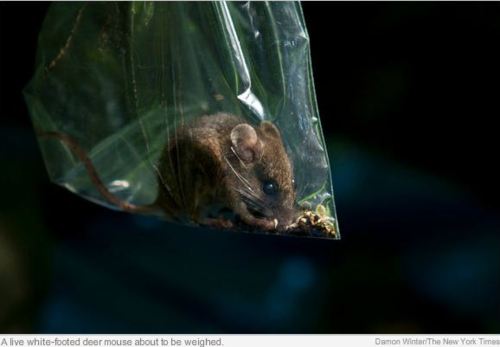
On this day in Highbridge Park his students, Mr. Cocco and Mr. Harris, spread a blue tarp on the forest floor, while Dr. Munshi-South walked to an orange flag planted in the ground. He picked up an aluminum box sitting next to the flag and pushed in a door at one end. At the other end of the box crouched a white-footed mouse. It gazed back at Dr. Munshi-South with bulging black eyes.

The researchers inspected 50 traps laid the day before and found seven mice inside. They plopped each mouse out of its trap and into a Ziploc bag. They clipped a scale to each bag to weigh the mice. Dr. Munshi-South gently took hold of the animals so his students could measure them with a ruler along their backs.

Dr. Munshi-South and his colleagues have been analyzing the DNA of the mice. He’s been surprised to find that the populations of mice in each park are genetically distinct from the mice in others. “The amount of differences you see among populations of mice in the same borough is similar to what you’d see across the whole southeastern United States,” he said.

White-footed mice live today in forests from Canada to Mexico. They arrived in the New York City region after ice age glaciers retreated 12,000 years ago. In the past few centuries, as their forest home became a city, they survived in New York’s patches of woods. (House mice, which New Yorkers battle in their apartments, arrived with European settlers.) Research by Dr. Munshi-South and his colleagues suggests that New York’s white-footed mice, which occupy isolated patches, are adapting to life in the city.  .  .  .

On a recent afternoon, James Danoff-Burg and Rob Dunn were clambering around in a narrow Broadway median on the Upper West Side. Dr. Danoff-Burg, a biologist at Columbia University, was digging up plastic cups from the ivy. Dr. Dunn, a biologist from North Carolina State University, was five feet in the air, crouched on a bough of a Japanese maple.

“New one! New one!” Dr. Dunn shouted over the traffic. He and Dr. Danoff-Burg were surveying the median for species of ants. Dr. Dunn had spotted Crematogaster lineolata, an ant species that he and Dr. Danoff-Burg had never found before in this particular urban habitat.

From his backpack, Dr. Dunn pulled out an aspirator, a rubber tube connected to a glass jar. Holding one end of the tube over the ant, he sucked it in. Instead of going into his mouth, the insect tumbled into the jar. (One hazard of urban evolutionary biology, said Dr. Dunn, is having your aspirator mistaken for a piece of drug paraphernalia.)

Dr. Danoff-Burg, Dr. Dunn and their colleagues chose to study the medians of Broadway to see how human activity alters biodiversity. In this artificial city, there is no environment more artificial than these medians, which sit on fill that was poured on top of subway tunnels. The scientists have found a blend of ant species, some that have been here since before the city existed, and others that have arrived more recently, hitching rides on ships, planes and trucks. The most common ant Dr. Danoff-Burg and Dr. Dunn encounter is the pavement ant (Tetramorium caespitum), which came from somewhere in Europe.

Biologists find a mixture of native and non-native in all the life forms they study in New York, from the trees in Central Park to the birds of Jamaica Bay. The biodiversity of New York today is the result of extinctions, invasions and adaptations. Manhattan was once home to 21 native species of orchids; today they’re all gone. In the current issue of Global Ecology and Biogeography, a team of scientists surveyedplant biodiversity in New York and 10 other cities. They found that 401 native plant species have vanished from New York since 1624, while 1,159 remain. New York’s native flora is vulnerable to extinction today in part because it was well adapted to the closed forests that once stood where the city is now.

Newcomers and Natives

As native species became extinct, new ones came to the city. As a major point of entry to the United States, New York is where many of North America’s invasive species first arrived. Some introductions were intentional. Starlings were brought to Central Park in 1890, for instance, as part of a project to bring every bird mentioned in Shakespeare to the United States. But most introduced species slipped in quietly.

Many non-native species quickly died out, but some fit comfortably into the city’s wildlife, and others wreaked havoc — first in New York and then beyond. New York was the port of entry for Dutch elm disease, chestnut blight, Asian longhorned beetles and other threats to trees across the country.

As the invaders adapted to New York, they put extra pressure on native species, competing with them for space and food. Recent research by the Brooklyn Botanic Garden found that American bittersweet vines are dwindling away within a 50-mile radius of New York City, outcompeted by Oriental bittersweet. At the same time, the two species are interbreeding, producing hybrids. “It’s a double-whammy,” said James D. Lewis, a plant ecologist at Fordham University.

Yet many native species still hold on. Dr. Danoff-Burg and Dr. Dunn were surprised to find that 9 out of the 13 ant species living in Broadway’s medians are native. Once the medians were built, the native species rushed in along with the invaders and created an ecosystem.

Dr. Danoff-Burg and Dr. Dunn are trying to figure out what controls the balance of native and new species in New York. They don’t understand why some medians have more biodiversity than others, for example. On natural islands, biodiversity tends to increase with the size of the islands. Dr. Danoff-Burg and Dr. Dunn find no such correlation in the medians on Broadway. They also have to determine how native species of ants are coexisting in such close quarters with invasive species.

New York, in other words, is an evolutionary experiment — one that some scientists find fascinating to observe. “It’s some new thing emerging around us,” Dr. Dunn said.’

via New York – Empire of Evolution – NYTimes.com.
Posted in plants, urban ecology, wildlife | Tagged , , , , | 3 Comments

New York Moves to Stop Foraging in City’s Parks

A recent article in the New York Times about foraging in city parks is food for thought.   People collect mushrooms in Golden Gate Park (Google “picking wild mushrooms in golden gate park).  Not sure what else.  Here’s what’s going on in N.Y. parks:

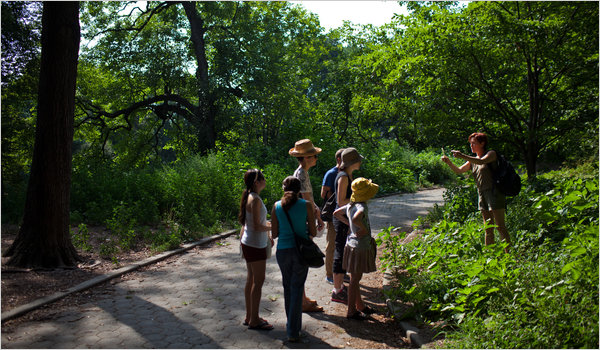
Leda Meredith, right, who wrote a book about eating locally on a budget, leads tours in Prospect Park about foraging.

“Maybe it is the spiraling cost of food in a tough economy or the logical next step in the movement to eat locally. Whatever the reason, New Yorkers are increasingly fanning out across the city’s parks to hunt and gather edible wild plants, like mushrooms, American ginger and elderberries.

Now parks officials want them to stop. New York’s public lands are not a communal pantry, they say. In recent months, the city has stepped up training of park rangers and enforcement-patrol officers, directing them to keep an eye out for foragers and chase them off.

“If people decide that they want to make their salads out of our plants, then we’re not going to have any chipmunks,” said Maria Hernandez, director of horticulture for the Central Park Conservancy, the nonprofit group that manages Central Park.

Plants are not the only things people are taking. In Prospect Park in Brooklyn last week, park rangers issued four summonses to two people for illegal fishing. Although officials say such poaching is not widespread, park advocates say taking fish and turtles for food is not uncommon, and some have reported evidence of traps designed to snare wildfowl.

Foraging used to be a quirky niche, filled most notably by “Wildman” Steve Brill, who for years has led foraging tours in the Northeast, including in Central Park. (He now sells a foraging app, too.) But foragers today are an eclectic bunch, including downtown hipsters, recent immigrants, vegans and people who do not believe in paying for food.

Even those who would never dream of plucking sassafras during a walk in the park can read about it. The magazine Edible Manhattan has an “Urban Forager” column (as does The New York Times’s City Room blog). And the current issue of Martha Stewart Living features a colorful spread about foraging on Ms. Stewart’s property in Maine — but at least all those plants belong to her.

While it has long been against the rules to collect or destroy plants in the city’s parks, with potential fines of $250, the city has preferred education to enforcement. “It’s listed in the prohibited uses of the parks, and the simple reason is that if everyone went out and collected whatever it is — a blackberry or wildflower — the parks couldn’t sustain that,” said Sarah Aucoin, director of urban park rangers for the Department of Parks and Recreation.

Officials have not gone as far as posting signs in Central Park that foraging is prohibited, for fear they would serve as arrows pointing to the most delectable areas. Ms. Hernandez of the park conservancy would take a reporter on a tour of edible plants only on the condition that their locations not be revealed.

For their part, regular foragers — especially those who write and teach about the practice — say that they are sensitive to the environment and that they focus on renewable items like leaves and berries. Besides, they say, much of their quarry comes from invasive species that squeeze out native plants.

“You’re almost doing the ecosystem in the park a favor by harvesting them,” said Leda Meredith, who wrote “The Locavore’s Handbook: The Busy Person’s Guide to Eating Local on a Budget,” which includes a chapter on foraging. Ms. Meredith, who leads tours in Prospect Park, says 70 percent of the plants she collects are nonnative and invasive.

“Japanese knotweed is very invasive, and it’s in season in April,” she said. It can be used like rhubarb, she added.

Marie Viljoen, a garden designer who writes the foraging column for Edible Manhattan, argued that parks officials were overstating the problem. “It’s a little alarmist to think that a park is going to be mowed down like a herd of deer went through,” she said.

Parks officials counter that they are more worried about the novices and say that certain plants, like American ginger and ramps, are especially vulnerable since they are yanked out, root and all. Park managers point out, too, that there are programs to weed out invasive plants.

Then there is the danger of poisonous and toxic plants. “Not everyone knows how to use these herbs and spices,” Ms. Hernandez said.

Some natural areas outside New York City accommodate foragers. Sandy Hook in New Jersey, which is part of the federal Gateway National Recreation Area, limits the harvesting of beach plum fruit, berries and mushrooms to “one quart container per person, per day,” said John Harlan Warren, a spokesman for the recreation area.

In New York’s state parks, the attitude seems more relaxed as well. “It’s illegal, but the occasional blueberry picker is not hauled away in handcuffs,” said Tom Alworth, deputy commissioner for natural resources for the State Office of Parks, Recreation and Historic Preservation.

Aside from issuing summonses, the city has not taken any recent legal action. It did go after Mr. Brill for foraging in Central Park once before: he was arrested in the mid-1980s, and it turned into a public relations debacle for the parks department. The charges were later dropped.

After appearing on television talk shows and receiving sympathetic news coverage, Mr. Brill was actually hired by the department as a naturalist and led foraging tours for a few years. He has since continued his tours privately, and says he is tolerated by Central Park’s rangers. “They usually wave at me,” he said.

Even some fellow foragers look askance at Mr. Brill. One of his tours in 2009 attracted 78 people, an all-time high. “I see him as the vaudeville showman of foraging,” Ms. Viljoen said. “I get nervous when I see that many people storming the park.”

via New York Moves to Stop Foraging in City’s Parks – NYTimes.com.

Posted in eating, guerilla gardeners, plants, urban ecology | Tagged , , , | Leave a comment