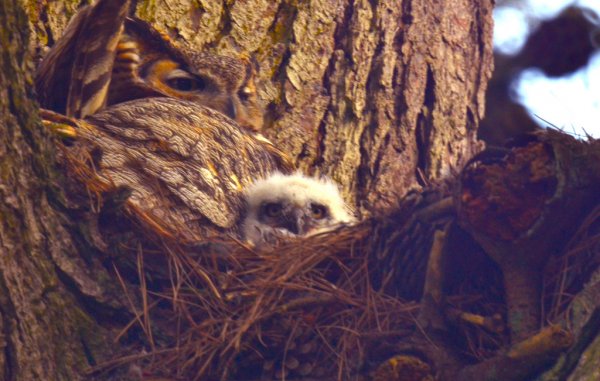
great horned owl chicks hatch in golden gate park

Golden Gate Park Owl Chick

A great horned owl and owl chick were spotted in a nest across the street from the bison paddock in San Francisco’s Golden Gate Park on Sunday. Richmond District resident David Cruz kept an eye on a pair of owls that hunt near the casting pools and snapped some pictures Sunday of the mother and one of two chicks that hatched in the last few weeks.

via Great horned owl chicks hatch in Golden Gate Park | SFGate Blog | an SFGate.com blog.

Posted in birds, wildlife | Tagged , , , , , , | 1 Comment

As Crime Falls, Central Park’s Night Use Grows

Here’s an excerpt from a recent article in the New York Times about increased use of Central Park at night.  Who uses Golden Gate Park at night, I wonder?

“For as long as most New Yorkers can remember, the rules have been clear:  Enjoy Central Park by day.  Keep out at night.

Someone, however, forgot to tell Fleur Bailey, a petite Wall Street trader who was walking her two Dalmatians in the park after 10 the other night.

“I can’t remember the last time I came across something that made me uncomfortable,” said Ms. Bailey, who lives on the Upper West Side and takes her dogs into the park as late as midnight. “Some people say, ‘You walk your dogs where at night?’ But I tell them that it’s perfectly fine.”

And she is hardly alone. On any given evening, the park now hums with life well into the night. Couples stroll under pools of lamplight, while the park drive pulses with the footfalls of runners, the whir of cyclists and the desultory clop of carriage horses. Men and women jog happily around the reservoir.

“It’s boringly safe,” said Christopher Moloney, 34, who cuts through the park at night, usually around 9, to get from his job in the Time Warner Center to his home on East 70th Street. “I’ve walked through the park at 3 in the morning, and there are always a couple of people here and there”  .  .  .

Those who use the park at night tend to have their own set of safety rules. A few nights a week, Pernilla Blomgren, 29, a consultant for the Swedish Trade Council, runs between 9 and 10 p.m. She usually heads for the path around the reservoir, where Victorian-style lampposts give ample light. She enters at Fifth Avenue and 90th Street, where joggers stretch out, and eschews an iPod. “I feel like you should have your senses clear so you can register what’s happening around you,” said Ms. Blomgren, who moved from Chicago and said she was unfamiliar with the Central Park jogger case.  .  .  .

Still, she said, but for the fact that she has to wake up early for work, she would run even later. “I’ve never seen anything bad happen,” she said. “It feels like the streets might be more dangerous than the park.”

The park conservancy’s own surveys show a marked rise in the proportion of women and older New Yorkers using the park, regardless of the hour. From the early 1980s to today, the percentage of adult parkgoers over age 50 climbed to 40 percent, from 12. Women’s presence in the park rose to 52 percent, from 32.

In a major study of Central Park usage released this year, nearly 80 percent of the visitors who were interviewed reported that there was no part of the park they avoided for safety reasons. Only 3.4 percent cited “safety concerns” as a major issue.

Park use has tripled since the early 1980s, when the conservancy began caring for the park and started a successful fund-raising effort. The private money it raises has helped cover the cost of meticulous restoration work across the park’s 843 acres. “A lot of people take the park for granted, but 25 years ago, the lights were broken, the benches were broken,” Douglas Blonsky, the conservancy’s president, said.

Over all, the city’s 1,700 parks have grown safer, like the city as a whole. New Yorkers for Parks, an advocacy group, reported in 2008 that half of the city’s 20 largest parks had five or fewer major felonies in 18 months.

Some people who frequent the park after sundown say they often have to reassure worried, often older, relatives. Others just tell fibs. Martin Blumberg, a 25-year-old theater director who lives on the Upper East Side, runs five nights a week around the six-mile park drive, usually no later than 10. But he tells his mother that he runs before dark. “She’s a worrywart,” he said.

Mr. Blumberg prefers the park at night, when it is cooler in the summer and less congested in the winter. “It’s never really desolate,” he said. “Every 100 feet, I see other runners.”

Some veteran parkgoers, like Dianne Montague, say that their fear of Central Park after dark had become so ingrained over the years that changing their perception was a slow process. Mrs. Montague, a native New Yorker who lives on 86th Street and Madison Avenue, walks her four dogs (boxer, pug, beagle and poodle) every night there. As the years have passed, she has ventured into the park later and later. These days, a final pit stop at 11:30 is not unusual.

“I’m a little more cautious than my children, because they grew up in a safer New York,” said Mrs. Montague, who rescues dogs and teaches horseback riding to people with disabilities. “I’m old-school. It took me a while to realize that the park is safe.”

via As Crime Falls, Central Park’s Night Use Grows – NYTimes.com.
Posted in safety | Tagged , , | 2 Comments

warren hellman meadow: renaming after banjo pickin’ billionaire

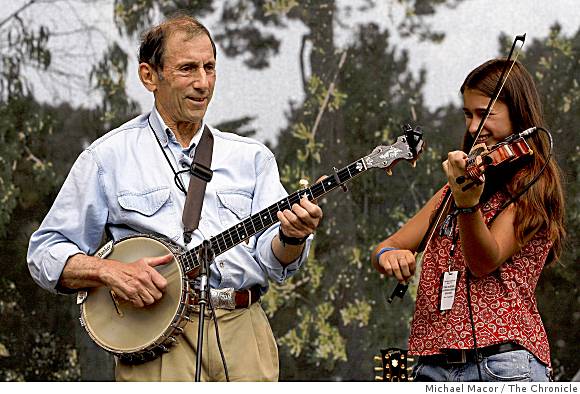
Warren Hellman opens Hardly Strictly Bluegrass with 13-year old Ruby Jane, 2008 (photo: Michael Macor, The Chronicle)

‘The Board of Supervisors has voted to recommend renaming Golden Gate Park’s Speedway Meadow after a billionaire financial titan.

But Warren Hellman isn’t your ordinary billionaire financial titan, and Speedway Meadow is no ordinary meadow.

The 77-year old private equity kingpin became a San Francisco institution when he started funding Hardly Strictly Bluegrass, an annual music festival in Golden Gate Park that draws up to three-quarters of a million music fans every year. Unlike other Bay Area music festivals, Hellman’s festival is completely free–paid for entirely out of his own pocket.

Supervisor Sean Elsbernd, who introduced the measure, said he’s doing it as a way to thank Hellman for his generosity.

“He really lived the credo he repeated often–‘You give where you live,'” Elsbernd told the San Francisco Examiner. “Renaming Speedway Meadow in his honor is a very nice thing to do as a small token of our appreciation for all that he has done.”

Hellman’s civic involvement doesn’t stop with the festival. He is also the chairman of the New York Times-affiliated non-profit news organization The Bay Citizen (although he plays no editorial role there) and was one of the most prominent supporters of this November’s successful pension reform measure, Proposition C.

He was also the driving force behind the installation of the controversial underground parking garage between Golden Gate Park’s California Academy of Sciences and de Young Museum.

“I am absolutely blown away by this gesture,” Hellman said in a statement to The Bay Citizen. “Golden Gate Park is home to some of the best (and worst) moments of my life: family picnics with my wife, kids and grandkids, morning runs, over a decade of Hardly Strictly Bluegrass, and of course, the longest eight years of my life building the underground garage. There are no words and my fingers couldn’t pluck a tune to express my gratitude. My only hope is that others experience the joy and happiness I’ve found standing, singing, plunking and listening in this beautiful meadow.”

While Hellman is the grandson influential California banker and philanthropist Isaias Hellman, his fortune is largely self-made. He was the president of the now-defunct investment-banking firm Lehman Brothers until the early 1980s when he founded the private equity firm Hellman & Friedman LLC.

The proposal to rename the field will have to be voted on by the Recreation and Parks Commission before becoming a reality.’

via Warren Hellman Meadow: Supes Propose Renaming Golden Gate Park Field After Banjo Pickin’ Billionaire (VIDEO).

Posted in arts, concerts, events in Golden Gate Park, people | Tagged , , , , | 1 Comment

new bison arrive at golden gate park

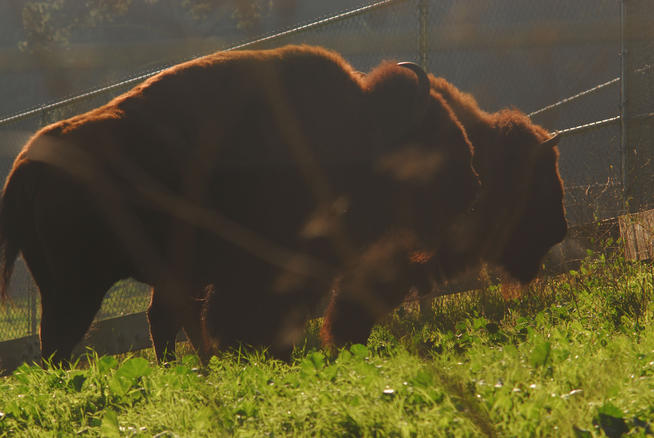
bison in golden gate park (photo: nbcbayareanews.com)

‘Far longer than there’s been a Golden Gate Bridge, Treasure Island or Coit Tower, there were bison roaming Golden Gate Park.

‘The first herd moved into a  pen in the park’s Music Concourse in 1891, and to its current west-end digs in 1899.

But following the deaths of two older females this year, the once-mighty herd was reduced to three females nearing the end of their lives. The future of this longtime tradition was in jeopardy.  But on Monday, a livestock truck pulled into the park, and unloaded the future of the buffalo exhibit. Seven females, all around six-months old, stepped into the bison paddock, separated by a fence from the park’s three older bison.

“Right now we’re keeping them separated from our older females,” said San Francisco Zookeeper Sarah King, “so that everybody can get accustomed to each other.”

The seven bison were purchased from a ranch in Redding. Assemblywoman Fiona Ma helped arrange funding and U.S. Senator Diane Feinstein’s husband Dick Blum chipped-in toward the nearly $7,200 price tag. He also donated $50 thousand dollars to update the bison’s crumbling paddock.

“In fact, the story goes Mr. Blum purchased a herd of bison in honor of his wife in 1984,” said San Francisco Parks and Recreation director Phil Ginsburg.

On Tuesday, the lumbering older gals were busy sizing up the new girls. The two groups of old and new will be united in a couple of months – once keepers declare them disease, and conflict-free.  The San Francisco Zoo, which cares for the herd, decided against adding males to the mix. Zookeepers say males can get a bit unruly, especially when ladies are in the picture.

 “So for the safety of the keepers and the bison, we prefer to just have the girls,” said King.

Just over a century ago, there were an estimated six-million bison roaming North America. By 1900, their numbers had been decimated – leaving only about a thousand. Though man was responsible for running them to near extinction, he’s also responsible for their rebound.

“In order to do that they actually had to crossbreed cattle with the existing bison,” said King.  “In fact, most of the bison today have cattle genes in them.”

The introduction of new blood into Golden Gate Park will insure the existence of the park’s herd.  Even in the dense urban landscape of San Francisco, a stroll in the park will wind past ten bison, gently grazing in a rolling field.’

New Bison Herd Arrives at Golden Gate Park | NBC Bay Area.

Posted in people, urban ecology, wildlife | Tagged , , , , , | 1 Comment

dancing the lindy in golden gate park

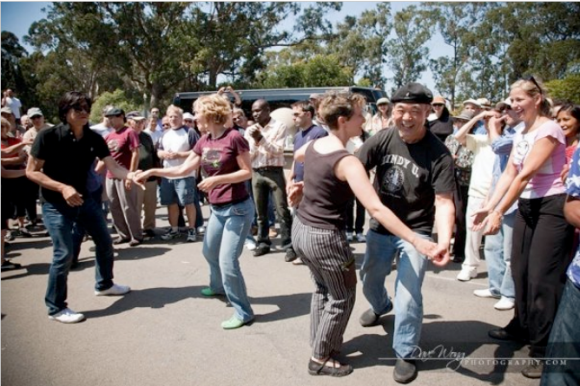
dancing in golden gate park (photo: kalwnews.org)

CAROLINA HIDALGO on dancing in the park:

‘It’s late on a sunny morning and people have filled the park. John F. Kennedy Drive is closed to car traffic, as it is every Sunday, and people are biking, skating, jogging, and walking. As I walk west to the de Young Museum, the sounds of music mix with the sounds of people. Lively music – ’40s style swing music – and as I get closer to the sound, I realize it’s coming from a gathering.

At the corner of Hagiwara Tea Garden Drive and JFK, where taxis and tour buses turn toward the de Young and Academy of Sciences, more than a hundred men and women stand together around the source. But they don’t stand still. They’re dancing … or, at least, they’re trying to.

Trish Richman is a regular.

TRISH RICHMAN: I first came to Lindy in the Park, probably almost six years ago.

She’s got dancing in her blood.

RICHMAN: My father was a swing dancer back in the ’40s, and we used to dance in the house, after dinner, and I’ve never thought about it, but all this music is my music that I grew up with. A friend of mine mentioned that there was a group of people dancing in the park, and he walked me by here and that was it. I’ve never stopped.

Richman and I are standing with others in a circle, surrounding all kinds of dancers. All kinds of people. Casual park-goers in shorts and tee-shirts, serious dancers in sporty clothes. One guy has tattoos and piercings all over his body – and he’s very, very good. All the old ladies want to dance with him.  .  .  .

Back home in Chile I love to dance, but in night clubs, or at friends’ houses, and probably with a drink in my hand. These people are in a park, in public, in the sunshine. But I decide to give it a try .  .  .

I feel ridiculous. And I want to get back in the circle of people watching. But then I look at the other students, all trying, some of them failing, all having fun, and I realize: “This is good.”.  .  .

RICHMAN: I think that with this dance, maybe with all dances but with partner dancings, there really are connection with another person. So if you work on a computer all day long and you don’t connect, this is how ever long the song is, a minute and a half, you’re connected with your partner.

Ah, yes. Connecting with a partner. Some men ask me to dance. In a club I’d usually say no, if they’re not my friends or my “type.” But somehow, here, it doesn’t feel flirtatious or threatening. It feels safe, like I can let myself go. So I take a spin with a short, plump guy with blue hair. And even though I keep mistaking salsa steps for swing, the spontaneous joy of the dance keeps me smiling.’

via Taking the dance floor outdoors in Golden Gate Park | San Francisco Bay Area News – Crosscurrents from KALW.

Posted in events in Golden Gate Park, people, recreation | Tagged , , , | 2 Comments

pocketing gophers in golden gate park and golf courses

hawk with gopher in golden gate park (photo: sfcitizen.com)

‘Sheila Bradford [a gardener with the Recreation and Parks Department] has recorded on a tally sheet the 1,290 gophers she’s trapped in city parks the past two years: 1,004 at Alta Plaza Park, 239 at Crocker Amazon Park, 12 at Presidio Library and 35 at Big Rec Field in Golden Gate Park.

[Here’s her description of the process]:

“I find their tunnels with a probe. When I’m poking around and the earth gives, I know there’s a tunnel there. I place the traps inside the tunnel, then cover the hole with a piece of cardboard and put soil over the top of it. Then I put flags in the ground so I know where to find the traps the next day. . .

With the old Macabee traps, I wasn’t catching as many gophers as I wanted to, and sometimes the gopher would still be alive when I found it in the trap. Then I would have to kill it. So I like the Gophinator better.  .  .  .

It’s not just what they do to the turf. They get into flowerbeds. They’ll eat plants, roots, vines. They’ll chew on trees. They’re really destructive.

I’ve done a lot of reading about gophers so I can be a better trapper. When I first started, I didn’t even know anything. I had a few rusty traps and just did it. After a while, seeing the progress and the way the parks started looking better, I thought, “Oh my God, this is a good thing I’m doing.”.  .  .

At Harding Park I’m also trapping moles. Moles are much harder to catch. They’re smaller and don’t have active tunnels that are as easy to find as gophers’. They travel closer to the surface of the lawn, ’cause they’re only eating worms and grubs. They ruin the turf by doing this, though.

A lot of people who’ve caught gophers have never caught moles. They’ll give up if they’re unsuccessful, but I never gave up.  .  .  .

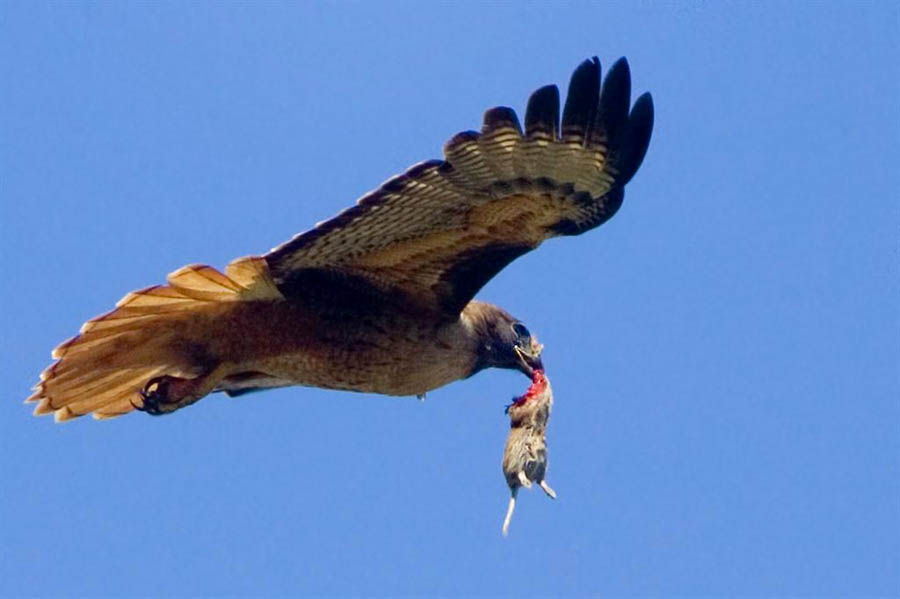
After a gopher or mole is dead, you can’t put them in the garbage. I set them out near the maintenance shed, where a hawk can swoop down and get them. You’re supposed to either do that, or put them back into the tunnel to decompose. Here at the golf course I’m not supposed to bury them, which is good: I’d rather feed the hawks.”‘

via Sheila Bradford pockets gophers on SF golf courses.

Posted in people, urban ecology, wildlife | Tagged , , , | 1 Comment

urban ecology: duckweed and african frogs clog golden gate park pond

duckweed-clogged lily pond in golden gate park (photo: fromthethicket)

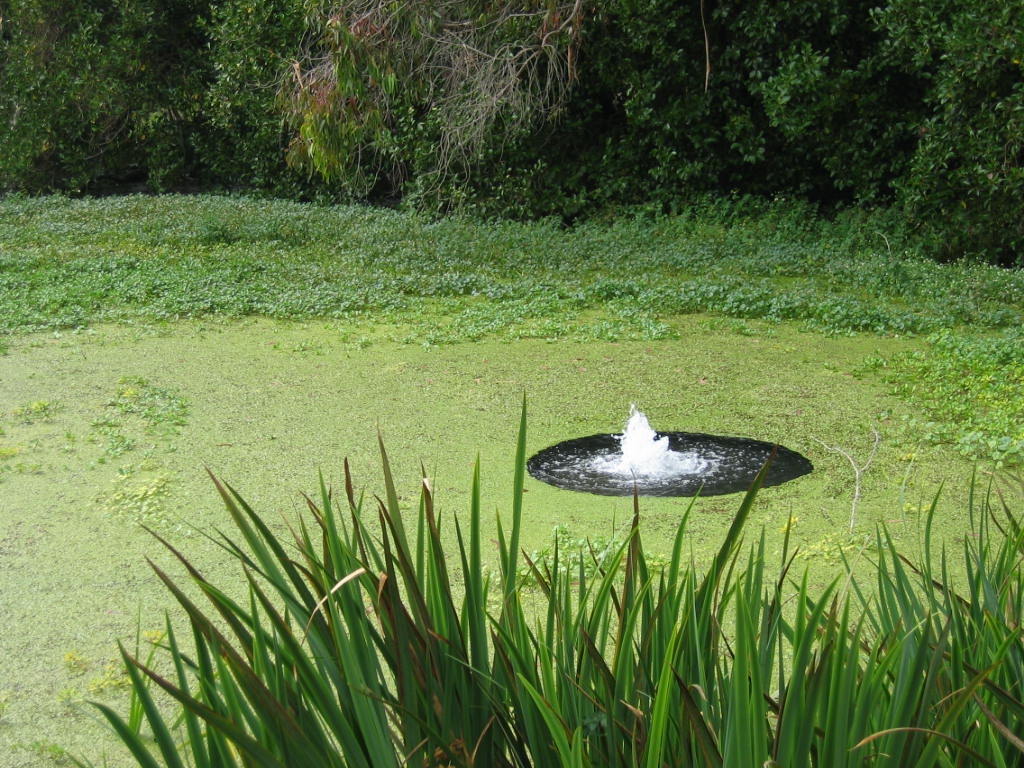
‘About a decade after a quickly growing weed and a vicious frog species infested a secluded pond in Golden Gate Park, San Francisco officials say they are close to a solution.  Once a crystal-clear reflecting pond sequestered on a short trail off John F. Kennedy Drive, the Lily Pond is now so overgrown by duckweed that its hard to tell that there is any water below the marshy surface.  Getting rid of the plant has been complicated by a population of African clawed frogs, an invasive species that can grow up to 5 inches long and will consume anything that will fit in its mouth.  The frogs have prevented Recreation and Park officials from fixing the pond, a former rock quarry that needs to be drained in order to repair the clay-lined bottom that has deteriorated over the last century.

Biologists worry that draining the pond before dealing with the invasive frogs might prompt the amphibians to jump off into other areas of the park, spreading into an even bigger problem.  And because the frogs need water to keep them happy at the Lily Pond, city officials have been unable to effectively kill the duckweed.  The leaky lining forces gardeners to frequently refill the pond with water. There are chemicals available to kill the duckweed, but they must remain in the water for 60 days.  If the gardeners refilled the pond during that time to keep water levels high, the chemicals would be diluted and ineffective. . . .

The task of removing the frogs and their eggs falls to the California Department of Fish and Game. City officials say the threat of the frogs escaping to other areas means they can’t remove any from the Lily Pond without a permit.”  We keep giving them our own plans and options for rehabilitating the lake,” said Phil Ginsburg, Rec and Parks general manager. ”   But because it does involve the removal of the frogs, we need their sign-on.”  One renovation option, which focuses on restoring the pond’s lining and nearby landscaping, would cost about $700,000, Ginsburg said.   A second option, priced at about $1 million, would invest more in repairing the pond’s base and more landscaping, and repaving areas like sidewalks and streets to make the area more inviting.  Which choice is selected will depend on money, Ginsburg said.  Funding could come from a number of sources – including donations, grants or bonds – but Ginsburg said the department has not been able to focus on this detail because the plans have not yet been finalized.

Eric Larson, a senior biologist supervisor for Fish and Game, said the planning has been drawn out because there is no established method for removing this specific type of frog. The department is currently looking at studies on the eradication of bullfrogs to see if the African clawed frogs can be removed in the same way.”  We’re approaching it in a very cautious way,” Larson said. “Whatever we do is an experiment.”  Larson said an eradication plan should be finalized this winter and could start as early as the spring. After that is complete, the renovations can begin.  Once the frogs are removed, Fish and Game will continue to monitor the area for another year or two to ensure that all frogs and eggs have been removed.”

African clawed frog

via Weed, frogs hard to remove from parks Lily Pond.

Posted in plants, urban ecology, wildlife | Tagged , , , , , | Leave a comment

ghost story in golden gate park, 1912


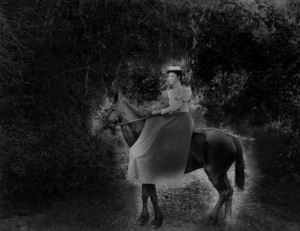
Here’s a tale for Halloween, a ghostly encounter in Golden Gate Park reported by George Haviland Barron, curator of the de Young Museum, in 1912:

“As the hour approached midnight, I decided to take a turn on South Drive before retiring. I often test myself identifying astronomical phenomena, but had little hope to do so this night. The fog had crept in. Tendrils of sea mist had gripped the night tightly, muffling sight and sound. I reached the drive, which I might have missed if not for the feel of the macadam road under my feet, and in the gloom I instinctively moved toward the lonely street lamp that stands on that part of the road. How deathly quiet the park felt at the hour! Even the usual doleful moans of distant foghorns were strangely absent.

No more than a moment after noting the extreme silence, and just as I reached the street lamp, I heard the clattering of horses’ hooves approaching from the east. I turned. Out of the haze of fog yellowed by the wan reach of the lamplight there did burst a large black horse galloping at full speed.

In an instant the beast was passing my startled form, and on its back I was surprised to see a young woman wearing a straw hat. Her eyes were protruding, her mouth gaped open, and her general expression was one of strained agony and terror. They were past me in a blink. At the curve in the road west the fog swallowed up the horse and girl and the sound of their manic ride before I had even finished raising my arm to hail the rider.  .  .  ”

for the back story, and the dramatic conclusion check out:  Before Now – The Ghost Rider of Golden Gate Park | The Ocean Beach Bulletin.

Posted in events in Golden Gate Park, ghosts, legends, people | Tagged , , | 1 Comment

artist harvests flax in golden gate park

artist-in-residence Glenda Joyce Hape (from Fine Arts Museum webpage)

“One of the many goals of the Artist-in-Residence program at the de Young Museum is to explore connections between the artists and the surrounding park environment. These connections enrich our museum visitors’ experience through the guest artists’ explorations and interpretations. Visiting artists from around the globe offer a unique experience to learn about natural materials found right here in Golden Gate Park.

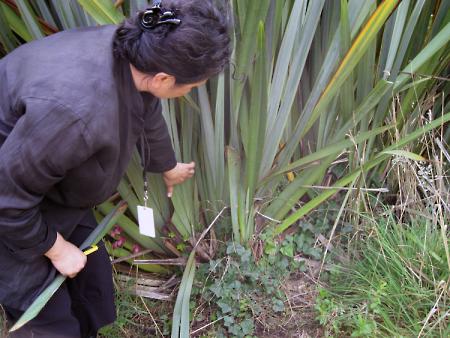
Māori artist Glenda Hape uses flax to weave and create contemporary art. There are more than 7,500 exotic plant species surrounding the de Young in Golden Gate Park, including several types of ornamental flax. The species of flax Glenda needed to continue her weaving projects in the Kimball Gallery is called Phormium tenax, also known as New Zealand flax (or harakeke in the Māori language). Last week, Glenda explained how difficult it is to harvest the materials she uses in her artistic practice, but with the assistance of Andy Stone, gardner and park supervisor for the San Francisco Recreation and Parks, Glenda’s harvesting trip around Stowe Lake was bountiful and she found just the right flax (harakeke).

Māori only harvest the outer, older “ancestor” leaves, which represent grandparents. They preserve the younger, overlapping inner three leaves, which look like a “V.” This configuration represents the family, the newest shoot is the child flanked and protected by the mother and father. Harvesting in this way also helps the flax bush to continue to grow.

View Glenda’s exhibition Connections through Fiber and be a part of her art making process. Join Glenda tomorrow night for the closing reception for her residency in the Kimball Education Gallery from 6:00–8:30 p.m.”

via Artist-in-Residence Glenda Joyce Hape Harvests Flax in Golden Gate Park | de Young Museum.

Posted in arts, de young museum, people, plants | Tagged , , | Leave a comment

parks alliance to sponsor talk on golden gate park

The history of Golden Gate is a composite of stories about people. Many interesting and colorful characters have left memorable footprints in this amazing landscape over the years. Join San Francisco Parks Alliance for an evening with Heath Schenker, local landscape historian and author, and Professor of Landscape Architecture at the University of California, Davis. Ms. Schenker will recount stories of some of the fascinating individuals who are part of the rich history of this remarkable park.

DATES: Tuesday, October 25, 2011

TIME: 6:30 pm to 8:00 pm

LOCATION: The Orchid Gallery (directly east of The Conservatory of Flowers) in Golden Gate Park

COST: Free to SFPA Members* – $10.00 Non-Members

Light refreshments will be served. Please RSVP by Friday, October 21, 2011 to Steve Bowles at415.750.5440 or steve@sfparksalliance.org.

*Includes NPC donors since 11/01/10.


Posted in events in Golden Gate Park, people | Tagged , | 1 Comment