charlie chaplin in golden gate park

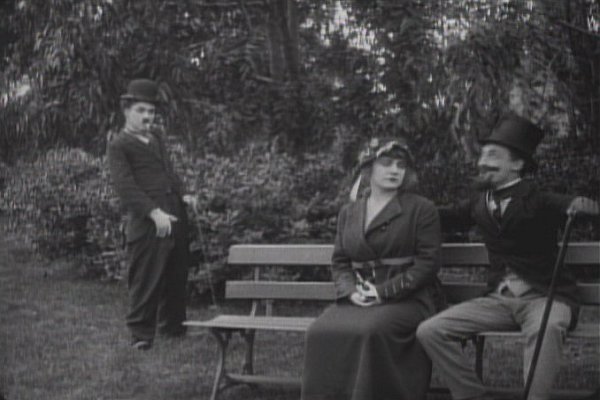
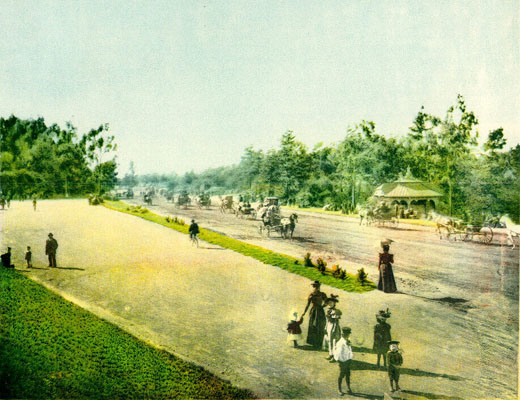
from charlie chaplin's film "a jitney elopement" filmed in golden gate park (1915)

Charlie Chaplin filmed several movies in Golden Gate Park, including “A Jitney Elopement” (1915) pictured above.  In this romance Chaplin plays the true love of Edna, whose father wants her to marry the wealthy Count He-Ha instead.  What place could be more appropriate for trysting lovers than Golden Gate Park?

Here’s a link to another Chaplin movie, “In the Park,” (1915) which also has scenes filmed in Golden Gate Park;  watch the beginning and see if you recognize the park from nearly 100 years ago!

http://www.archive.org/details/CC_1915_03_18_InThePark

(Thanks to Susan Chainey for this fun link to film and park history!)

Posted in arts | 1 Comment

the machine in the garden?

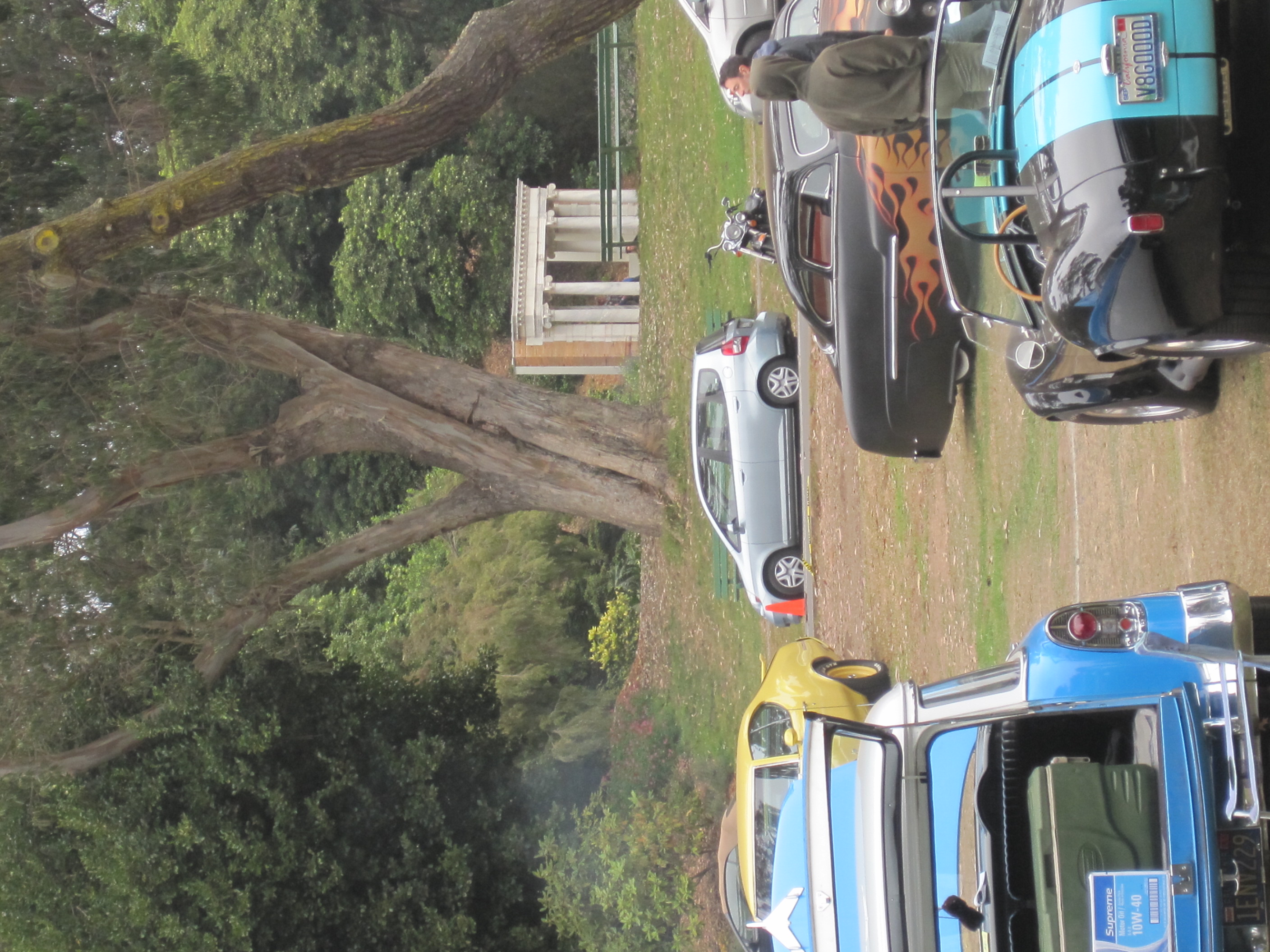
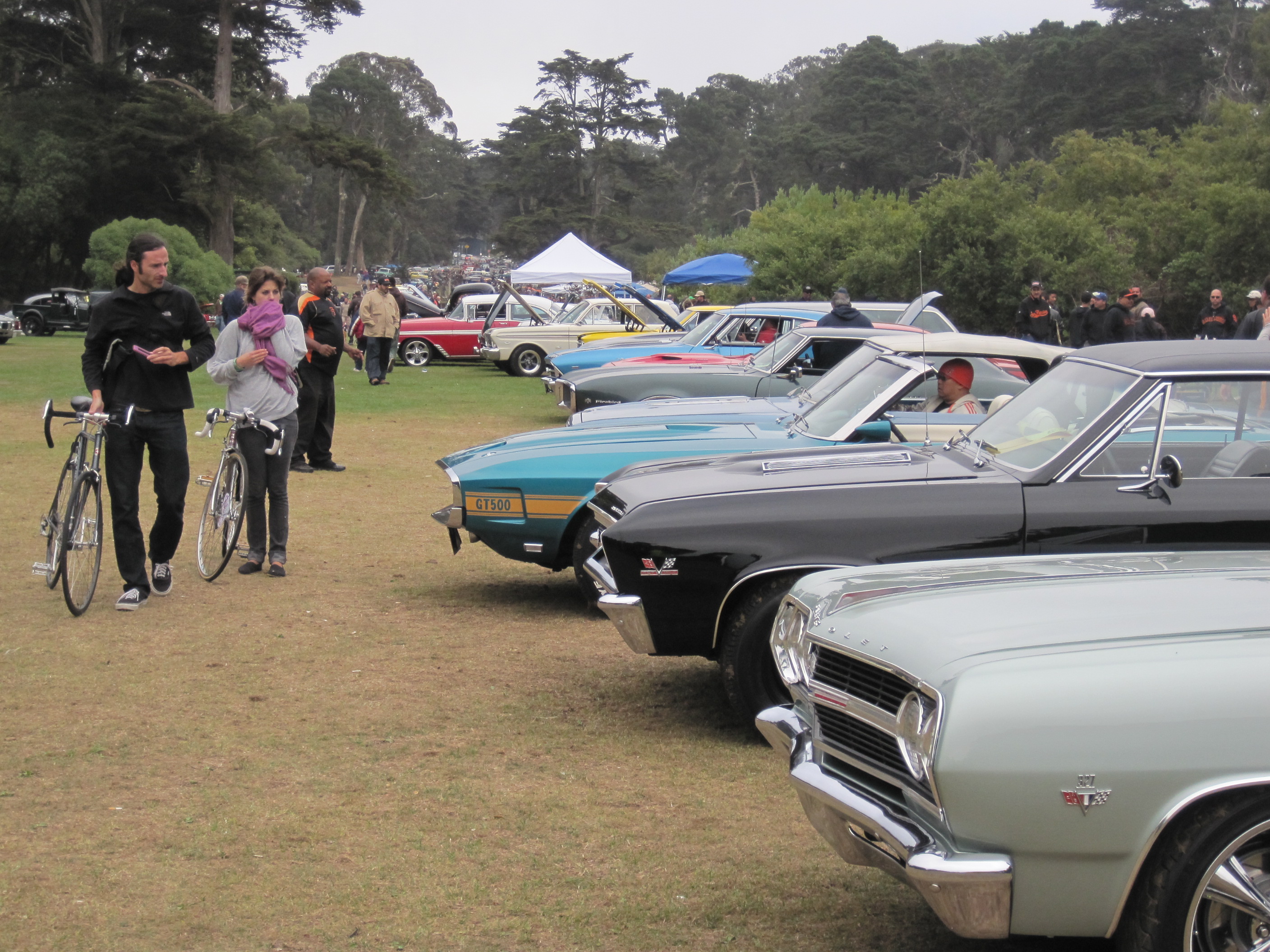
Tommy's Old Car Picnic, Golden Gate Park, 10/16/10

When Frederick Law Olmsted and Calvert Vaux designed Central Park in New York in the mid-nineteenth century, they depressed the four cross-town roads below the grade of the park, to prevent the hustle and bustle of city traffic from interfering with the tranquil effects of Nature they aimed to create in the park.

This ground-breaking decision in Central Park addressed a conflict that has plagued the custodians of urban parks every since, and become even more challenging since the advent of the automobile.  It’s an example of a deep-seated contradiction in our culture, identified with great perception by the literary and cultural historian Leo Marx, in a book entitled:  The Machine in the Garden:  Technology and the Pastoral Ideal in America (Oxford University Press, 1964, 2000).   In this book Leo Marx discusses many instances in which “the pastoral ideal has been incorporated in a powerful metaphor of contradiction” in American culture.  He cites examples from American literature and the culture at large to illustrate how “an inchoate longing for a more ‘natural’ environment” often butts up against “the hard social and technological realities” of our contemporary, technologically-driven society.  I was so reminded of this contradiction a couple of weeks ago, coming across Tommy’s Old Car Picnic in Speedway Meadow in Golden Gate Park.

Posted in events in Golden Gate Park, history | Leave a comment

interesting history of controversy over native plants

http://arnoldia.arboretum.harvard.edu/pdf/articles/646.pdf

Posted in history | 3 Comments

guerilla gardening with native plants

propagation area

A hand-lettered sign at the entrance to the recycling yard behind Kezar Stadium on Lincoln Ave. reads “Native Plants from the San Francisco Peninsula.”   Intrigued, I did some research and then visited.  As I walked into the yard, a man with long, straight, gray beard called out:  “Are you from the deYoung Museum?”  I said “No, I’m here to see Greg Garr.”  He said, “Oh, he’s the grumpy guy at the end of the yard, behind the compost bins.  If you’re interested in native plants, he’ll be nice to you.  If not, watch out!”

Greg Garr is the driving force behind this native plant nursery at the recycling center.  He has been running it for about seven years and works there seven days a week.  He is actually employed by the Haight Ashbury Neighborhood Council (HANC), although the facility is on park land (Garr told me it is listed as a “noncompliant use” in the park master plan).  Hands gray with dirt, face weathered, short gray hair, he is a bit gruff, but passionate and extremely knowledgeable about native plants. Surrounded by compost bins and stacks of quart-sized plastic pots, he was potting seedlings from a flat into 1-quart pots.  

This nursery looks a bit impromptu, but actually it operates on an efficient system.  Garr has planted a garden all around the recycling center, including about 60 species of shrubs and herbaceous plants, all native to the San Francisco peninsula. With the help of a couple of interns, he collects the seeds from mature plants and starts them in flats laid out in rows inside the fence that runs along Lincoln Ave.  Once sprouted, the seedlings are transplanted from the flats into one-gallon pots that people have dropped off for recycling.  They are then moved to a propagation area behind the Kezar Stadium service building and allowed to settle into their pots and reach a decent size before they are offered to public for sale, displayed on racks along north side of recycling area.

Garr, who is now on the board of Nature in the City, told me that he first got involved in the park years ago, as part of early efforts to restore the Oak Woodlands.  Work parties of concerned citizens sometimes removed invasive exotic species, like Eucalyptus and French broom,  without permission from park authorities.  In fact, this native plant nursery has a whiff of guerilla gardening about it, although apparently tolerated at this point by the park authorities.   Native plants as squatters?!  Garr told me that he doesn’t own a car and has converted his driveway into a native plant garden.

Here is an article in the S.F. Chronicle about the HANC Native Plant Nursery:

http://www.sfgate.com/cgi-bin/article.cgi?f=/c/a/2009/07/15/DDO218HBK8.DTL

Posted in guerilla gardeners, people | 1 Comment

musing in the tea garden

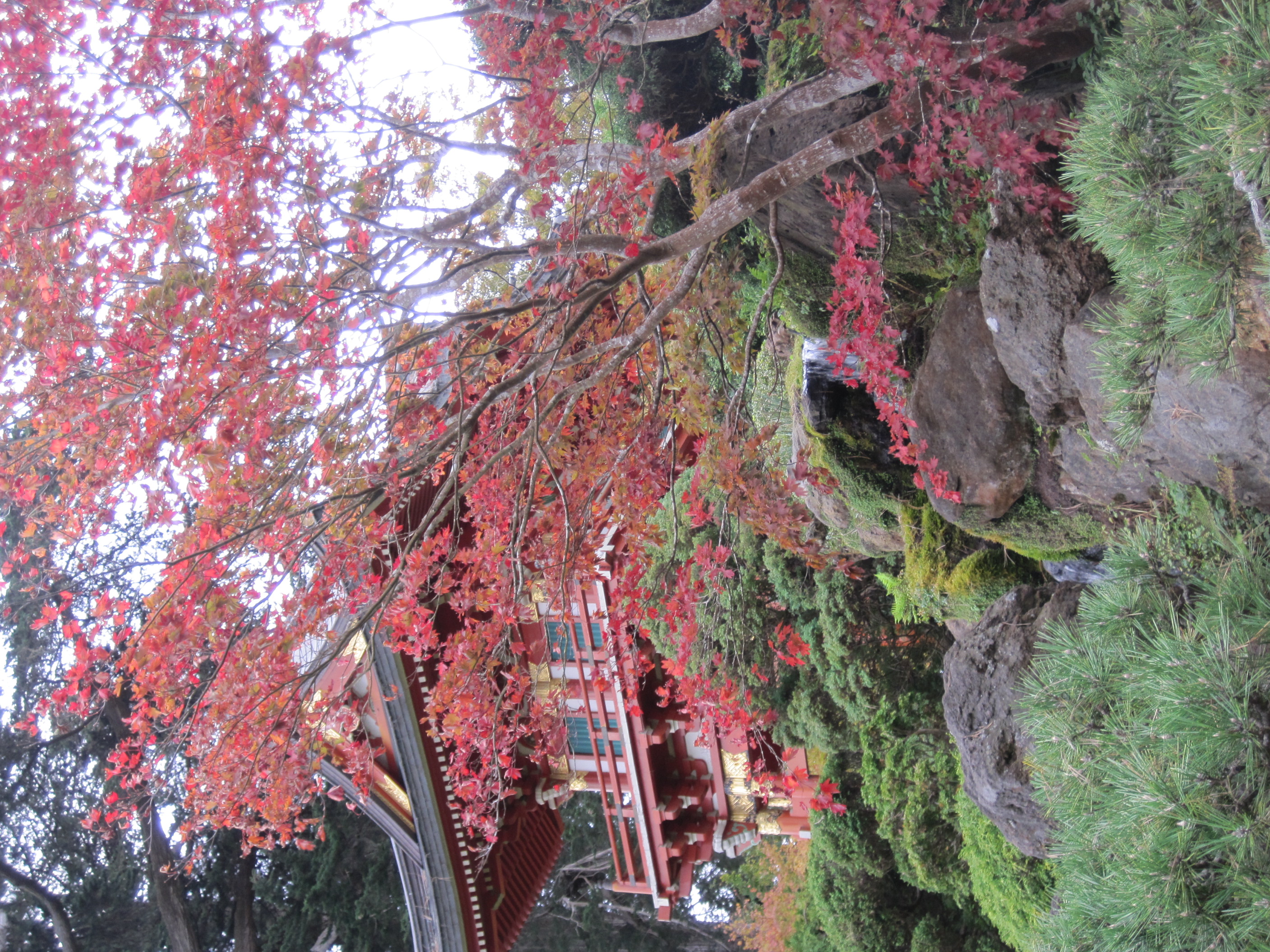
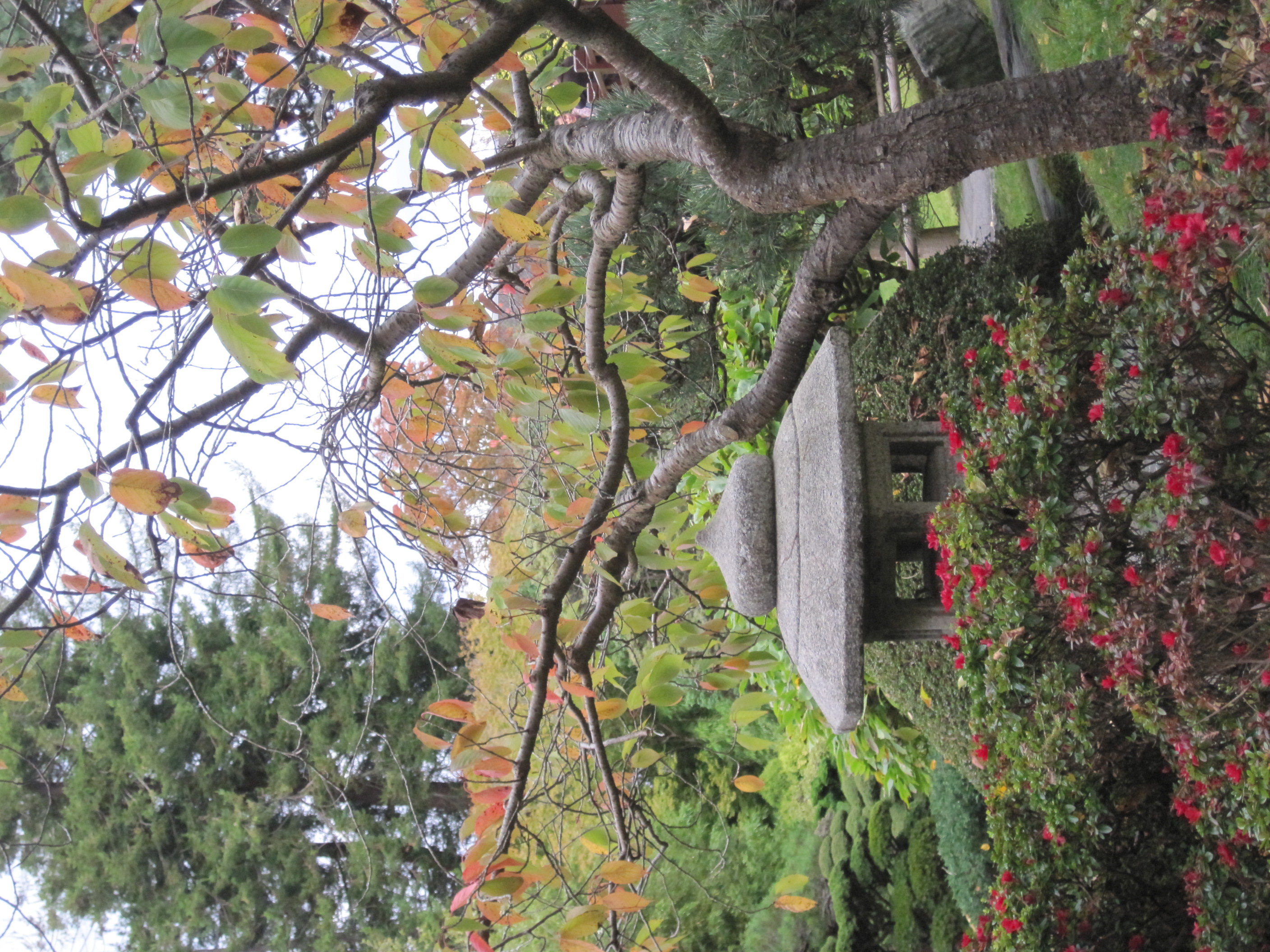
The Japanese Tea Garden is now a study in fall color.  Like the first layer of watercolor wash applied with a brush to paper, the saturation is variable throughout the garden now, with a spot or two of brilliant red, some more muted orange and yellow, yellow-green at the tips of still dark green branches.

Wandering along the intricate paths, I thought about how this process of leaves turning in the fall, like the process of leafing out in the spring, is a key to the complex microclimates in the garden, as well as the genetic characteristics of the various plants.  Both affect fall color.   Some maples are leading because they are genetically programmed to be first;  others because they are in a corner of the garden where the colder night air settles, so they experience the proverbial “cold snap” earlier than their neighbors.  Japanese maples have been genetically engineered to favor aesthetic characteristics, such as fall color.  And the display in this Tea Garden is a gorgeous illustration of the success of that project.

The cherries seem to all be ahead of the curve, with only sparse, salmon-colored leaves clinging to lichen-coated branches now, the tree skeletons revealed like in a japanese brush painting, jagged and twisting.

Sitting on the terrace of the Tea House, sipping Jasmine Tea, I was mesmerized by the gorgeous scene before me.  It really is a living work of art, so skillfully composed and executed, beautiful from far away and close up and from every angle.

Gray, bush-tailed squirrels were chasing each other around the tree trunks and up to the ledge of the ticket booth, begging for tidbits.  And a black phoebe hopped around on the stones at the water’s edge, tail bobbing up and down, searching for flying food.  This made me wonder about the habitat value of this picture-perfect garden.  With every plant shaped into a pleasing form, every fallen leaf part of the composition  .  .  .  what flying insects are there for the black phoebe to catch and eat?  Where is her nest? Is she resident or just passing through?

On my way out, I glimpsed a large bird across the water, partially concealed by overhanging foliage.  Turned out to be a sculpture, not a live bird.  A crane, I think?  A lovely work of art, but a bit disappointing.  I would have been so excited if it had been a live Sandhill Crane, in residence for the winter!  Or even a Blue Heron (a more common sight in Golden Gate Park, but always thrilling)!  But still, it was lovely to see this large, graceful bird in the picture. 

Posted in fall foliage, trees/urban forest, wildlife | Leave a comment

is golden gate park an urban forest?!

Here’s an interesting puzzle!  Friends of the Urban Forest is creating an urban forest map of San Francisco that omits Golden Gate Park (the project also omits the other parks in the city, including the Presidio).

http://www.urbanforestmap.org/map/

I understand the reasoning:  FUF is all about street trees.  However, it would be easier to ignore this omission if there were an equivalent map of the urban forest in Golden Gate Park.  Does such a document exist?!

A couple of weeks ago I spent a day looking for such a document in the archive that Elizabeth McClintock left at the Academy of Sciences (in the research library).  I did not find anything resembling a tree inventory or a map of the trees of Golden Gate Park.   However, I did come across a proposal she wrote for a tree inventory of the park in 1983.  This proposal, apparently incomplete and never funded, begins with the sentence:  “One of the remarkable features of Golden Gate Park is the large number of species of trees that make up the park’s urban forest.” [italics added]  She then contrasts the original sand dunes on the site with the “forest” planted by the park’s creators and bemoans the lack of record-keeping during that effort.

But she did extract from early Park Commissioners’ Reports some remarkable lists of trees that were planted, including a list from the 1893 Commissioners’ Report:  6,334 Monterey cypresses (Cupressus macrocarpa), 1,833 Monterey pines (Pinus radiata), 27,467 specimens of Leptospermum laevigatum, 30 black acacias (Acacia melanoxylon), 1,860 plume albizias (Albizia lophantha) and probably over 400 Maritime pines (Pinus pinaster).  She also mentioned the 1924 Park Commissioners’ Report, which contains a 14-page Catalogue of Trees, Shrubs, Vines, Evergreen Ground Covers, etc., Growing in Golden Gate Park.  “A story without words, of the development of the park’s forest during the more than 25 years between the two reports,” she noted.

When McClintock drafted this proposal for a tree inventory, the park’s urban forest had matured and the need to replace old trees was recognized (the Golden Gate Park Forest Management Plan was adopted in 1980).  She called for an inventory to aid in the reforestation process.  Noting that she and some colleagues had started a tree survey in the park in the 1960s, but only covered the western part of the park, identifying 97 species of trees, she estimated that roughly 200 species existed in the park at that time.  McClintock proposed completing the inventory she and her colleagues had started and expressed “hope that a few others might also be interested.”

This was nearly 30 years ago.  I don’t think this proposal went anywhere (readers, please weigh in if you have information about this!)?  I’m thinking that Golden Gate Park could benefit enormously from a Geographic Information System (GIS) map that includes a complete tree inventory, as well as information about the understory plantings, topography, infrastructure, etc. Wouldn’t this be a perfect project for grant funding?  Like Elizabeth McClintock, I wonder if a few others might be interested in this.  Surely the time is right for such a project!?
Posted in trees/urban forest | 5 Comments

roof-top environmental science

Last Sunday, braving the steady drizzle and chilly temperature, six citizen scientists took part in an on-going science project on the roof of the Academy of Sciences in Golden Gate Park.  Academy Naturalist Alana Hysert oversees monthly monitoring of plants, birds and insects that are adapting to the living roof environment.  She trains volunteers on what to look for and scientific procedures, then acts as knowledgeable guide and instructor during monthly sessions on the roof and keeps track of the data collected.  I joined the volunteers last weekend to learn more about this project first hand and I came away with a much more scientific point of view on the roof!

We began in the warm, dry (indoor) Naturalist Center, reviewing pressed samples of plants we might expect to see on the roof, both native species that are being encouraged to grow there and exotic invasive species that will be weeded out by gardeners.

Then we donned rain gear and yellow safety vests, slung binoculars around our necks and headed upstairs. For the first hour or so we birded on the roof, calling out species and numbers as we saw them.  The highlights, for me at least, were a small cluster of (5) lesser goldfinches foraging on the faded seed stalks of Prunella vulgaris ‘lanceolata,’ a major component of the living carpet that covers the roof, and a lone black phoebe perched on the roof railing.  Most of the other birds we spotted flying over or in the trees surrounding the academy.

Next we collected insects from traps set out on the quadrants of the roof that are being monitored.  There are both surface traps (shallow dishes filled with water and sitting on the surface) and ground traps (deeper containers set into the ground).  The yield included millepedes and centipedes, various flies, bees, spiders, daddy longlegs, earwigs, probably some thrips (requiring a microscope for definitive identification).

Due to the rain, we did not do the normal plant count, which would have entailed identifying and counting plant species found within a two-foot-square frame laid down at specific spots on the roof (same spots each month).  Not an easy job, as the plants have grown together into a dense fabric (kind of like counting stitches on a multi-colored, patterned sweater!).  Altogether it was a fascinating morning that brought home to me just how “living” that roof is!

Posted in california academy of sciences, wildlife | 1 Comment

why sparrows change their tunes

Wild Neighbors: The Baptista Tapes: Why Sparrows Change Their Tunes. Category: Columns from The Berkeley Daily Planet.

Posted in california academy of sciences, people, wildlife | 1 Comment

bison and sparrows

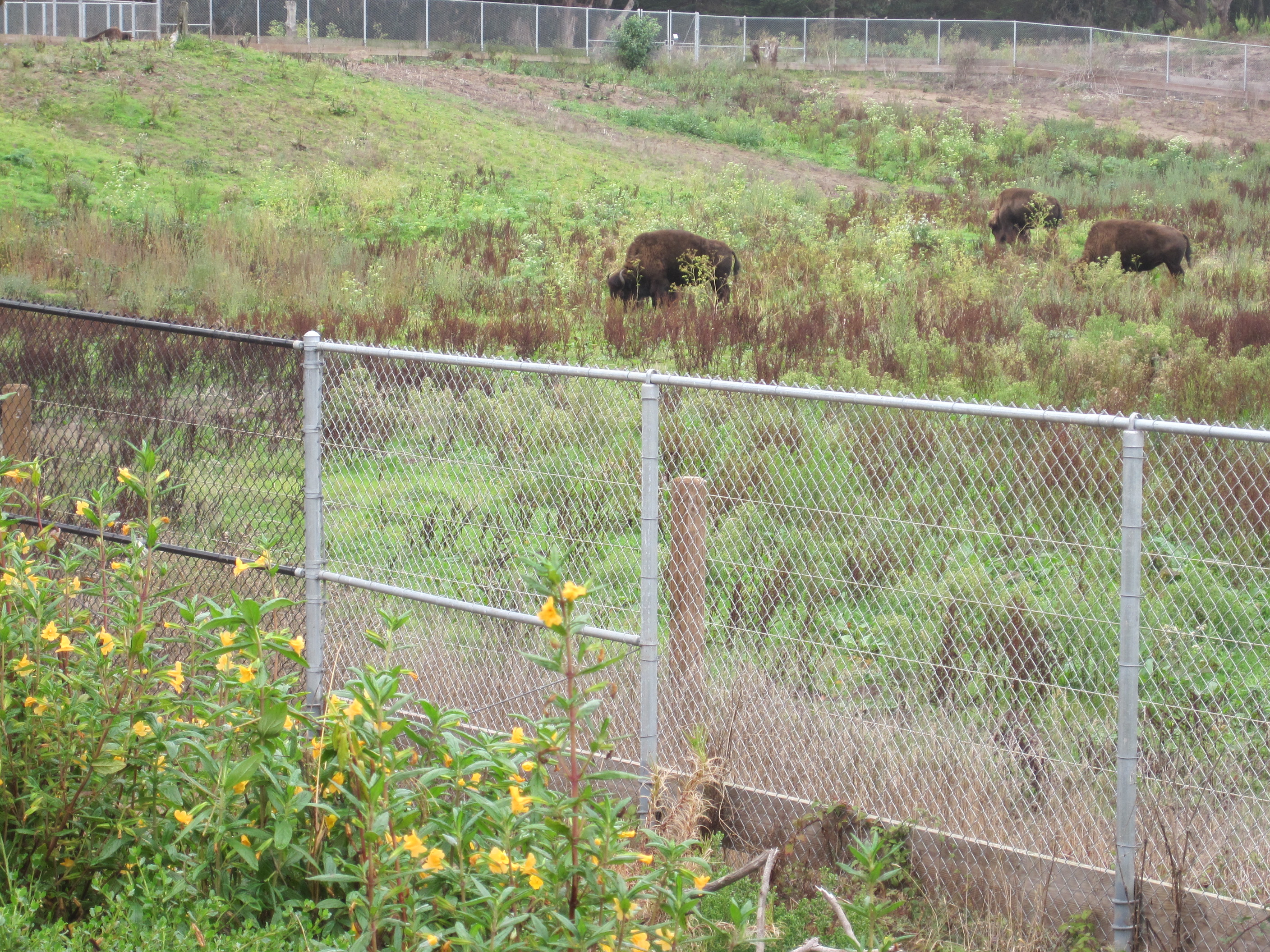
Along the fence of the bison paddock in Golden Gate Park a group of volunteers has been installing new planting designed to attract white crowned sparrows.  Now that’s a contrast for you;  what could link these huge beasts to these tiny song birds!?  Actually, this seemingly incongruous pairing of wildlife habitats is not as random as it may appear at first glance.

new habitat designed to attract song birds by the bison paddock

Bison were first introduced into Golden Gate Park in 1891 in an effort to save the species, once so prevalent on the great plains of North America but then on the brink of extinction. Efforts to breed the bison in the park proved successful and the herd has been living in this paddock in the park since it was constructed in 1899.  The herd is now managed by the staff from the San Francisco Zoo.

Like the American Bison in 1891, the Nuttalls white-crowned sparrow is currently feeling the impact of dwindling habitat, at least in Golden Gate Park.
http://www.allaboutbirds.org/guide/White-crowned_Sparrow/lifehistory
These little birds used to be resident in the park in large numbers.  Dr. Luis Baptista, Curator of Ornithology and Mammology at the Academy of Sciences from 1987 – 2000 and an expert on bird sounds, recorded and studied the calls of white-crowned sparrows in the park for many years.   It was an ideal laboratory for this work.

The current white-crowned sparrow habitat restoration project is a partnership between Nature in the City and park staff.  Josiah Clark, who is leading the project, first encountered these birds when he was growing up in San Francisco and worked with Luis Baptists, helping him with his research.  Dr. Baptista would surely be pleased to see this effort to ensure a future for white crowned sparrows in Golden Gate Park!

Posted in wildlife | Leave a comment

golden gate park fall foliage tour

The first signs of fall are here!  Here’s a picture of cherry trees at the entrance to North Lake (intersection of Chain of lakes Drive East an JFK Drive).  And the grasses in front of the De Young Museum.

Another week or so and the Japanese Maples in the Tea Garden will be in full glory.  Stay tuned for updates.  And please post sightings of your own!

Posted in fall foliage | Leave a comment