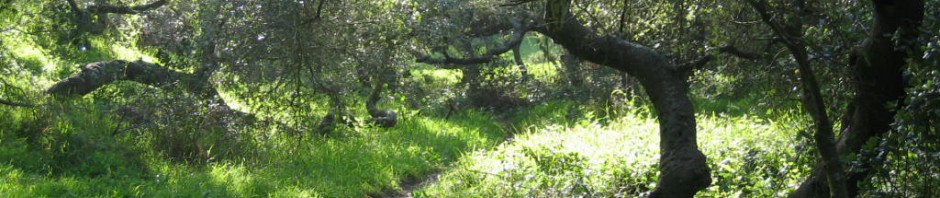

roof garden, courtesy of the california academy of sciences
At a symposium last weekend at the Academy of Sciences, Alana Hysert, Academy Naturalist, reported some interesting preliminary data on the living roof. Recognizing the research and education potential of the new green roof, Hysert has been overseeing a citizen science project, involving 67 volunteers whom she has trained to monitor the plants, insects and birds that are adapting to life up on that aerial garden. Data collected since June 2009 shows increasing diversity in plants, birds and insects with some species beginning to dominate. The most prevalent plant species are the beach strawberry (Fragaria chiloensis), selfheal (Prunella vulgaris), and (surprise!) moss. Nobody knows where the mosses came from, but they appear to be varieties of early-succession mosses, the types that commonly show up in disturbed soil.
The project is monitoring plants in four different quadrants of the roof (NE, NW, SE and SW), and another interesting finding is that in two of the quadrants, there are now slightly more non-native species than native species, while in the other two areas the native species still outnumber the non-natives significantly, although non-natives are appearing there as well. The roof was originally planted with only native species, so, as expected, non-native plants have begun to colonize the roof. But why this difference in different areas of the roof?
Twenty orders of Arthropods (insects) have been collected on the roof in both surface and pit traps. The most abundant order is the one that includes flies/gnats/mosquitos. Again, there is significant variation between the four areas of the roof that are being monitored. Identifying insects is a time-consuming (and eye-wearying) process and more volunteers are needed for a more exhaustive analysis of this data.
Brewer’s Blackbirds are the most common bird species sighted on the roof (no surprise! 735 have been counted). Other commonly sighted birds are Common Raven, Rock Pigeon, European Starling, Red-winged Blackbird and American Crow. Uncommon birds sighted include Red-masked Parrots, Townsends Warbler, Pelagic Cormorant, Great Egret, American Pipit and Allen’s Hummingbird. Most exciting was when a newly fledged Red-tailed Hawk landed on the roof from a nest in a nearby tree and the hawks foraged there until the young were able to leave. Also, a pair of Black Eyed Juncos nested successfully on the roof (the first birds to actually make it their home!).
So, that’s the latest report on the living roof. Stay tuned for future updates!





 golden gate park: views from the thicket